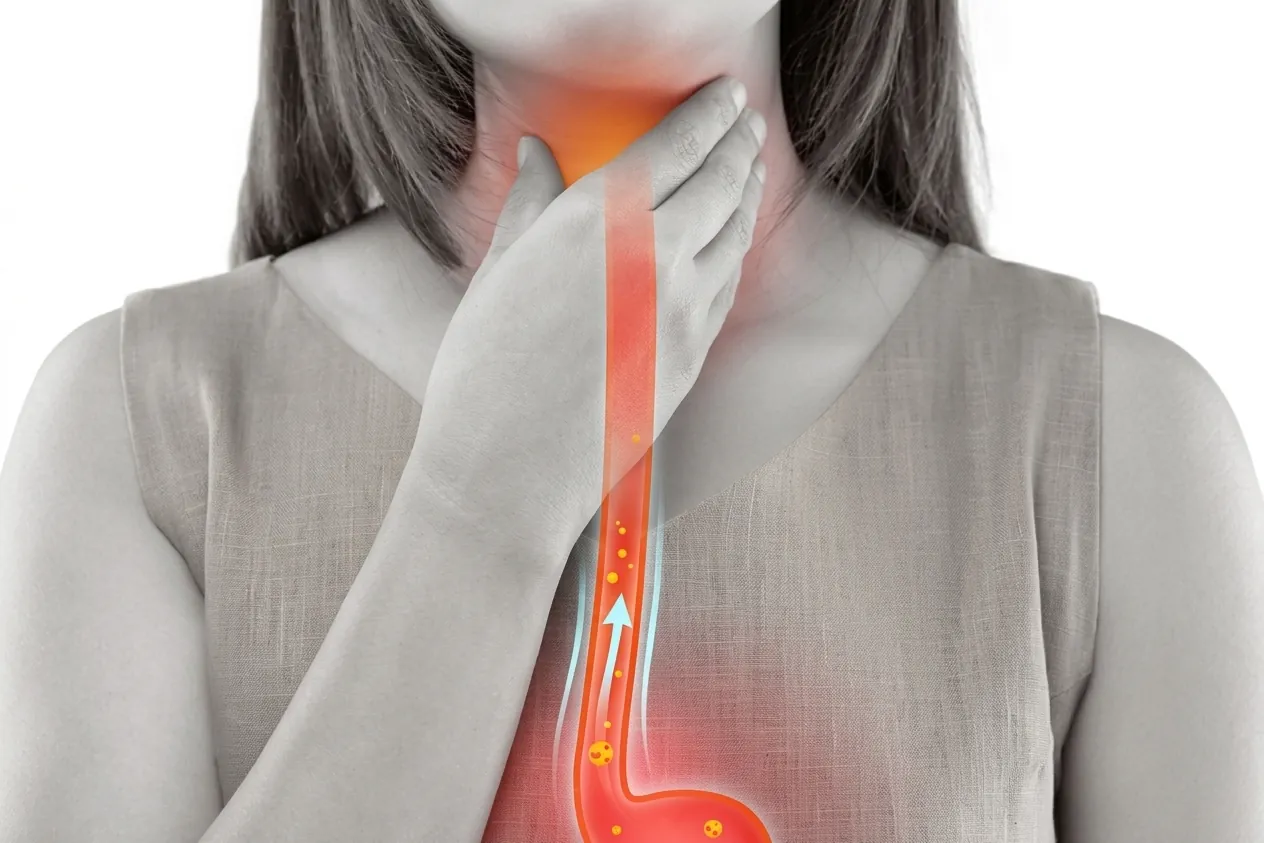
Heartburn, a constant lump in the throat, pressure in the chest or clearing your throat every morning. More and more people live with these problems today. Reflux has become a true modern-lifestyle condition.
As a trainer, I meet this topic with my clients very often. And what matters even more to me — I have been through it myself. I know how frustrating it is not to be able to sleep properly because of that unpleasant pressure in the chest, to keep worrying about what you can eat, to keep clearing your throat and to taste bitterness in your mouth.
When I was struggling with reflux myself, I understood one essential thing: reflux is not just about the stomach. It has many contributing factors. If we want to manage it for good, we need to look at the body as one connected whole.
How reflux shows up
Many people think reflux only means classic heartburn. But the strength and form of the symptoms differ from person to person, and you don't need an "official" reflux diagnosis to feel its effects.
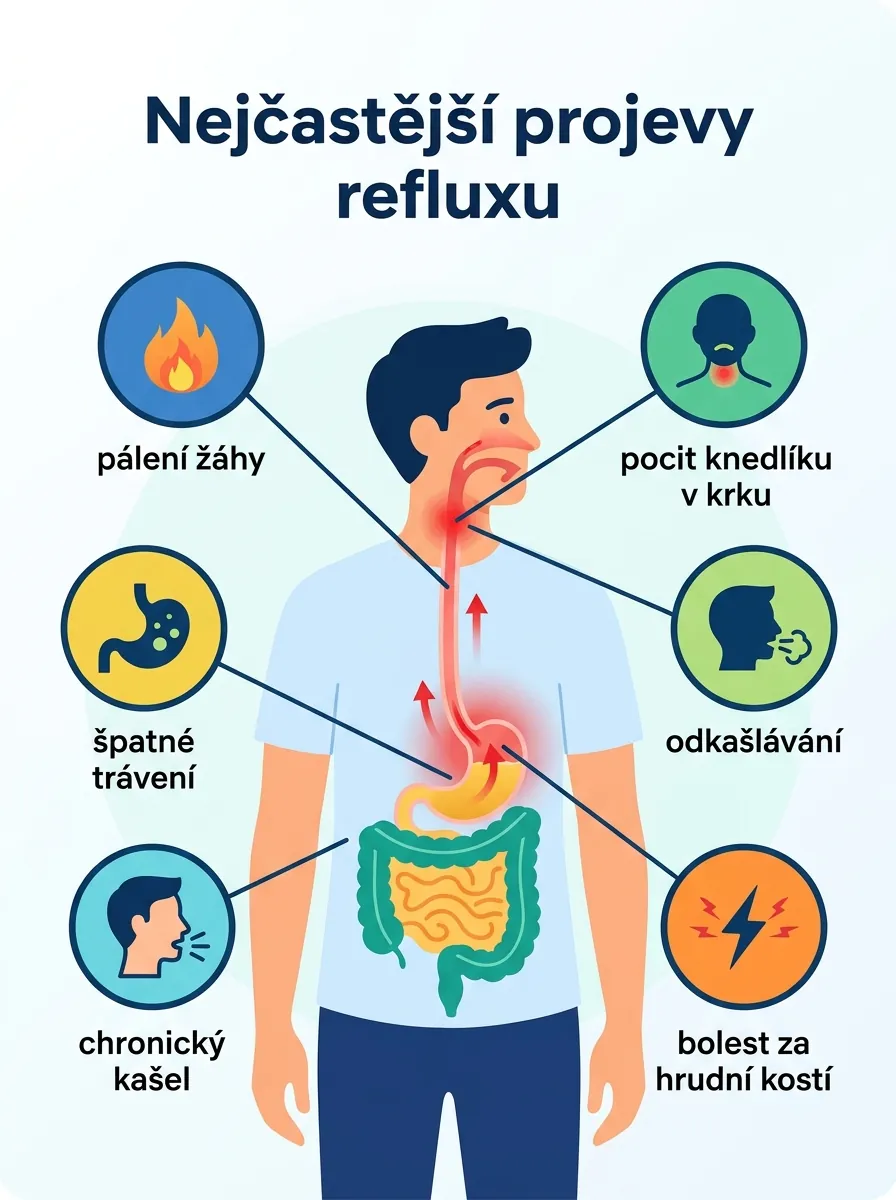
Typical (classic) symptoms:
- Heartburn (pyrosis). An unpleasant burning sensation behind the breastbone that often shoots up into the throat.
- Stomach juices coming back into the mouth. A sour or bitter taste, especially after eating or when lying down.
- Pressure and pain in the chest. Often mistaken for a blocked thoracic spine or even heart problems.
- Fullness and bloating. The stomach digests slowly and food just "sits" there.
Atypical (extra-oesophageal) symptoms:
- A lump in the throat (globus). A constant urge to swallow, or a feeling of something stuck in the throat.
- Chronic throat-clearing and hoarseness. Acid vapours irritate the vocal cords and airways, especially in the morning.
- More mucus. The body tries to protect the irritated throat.
- Tooth decay or sensitive gums. Caused by long-term exposure to an acidic environment in the mouth.
- Irritated sinuses, pressure in the ears and in the head.
Why reflux has many causes
Reflux is not driven by one single thing. It is a mosaic of factors that fit together:
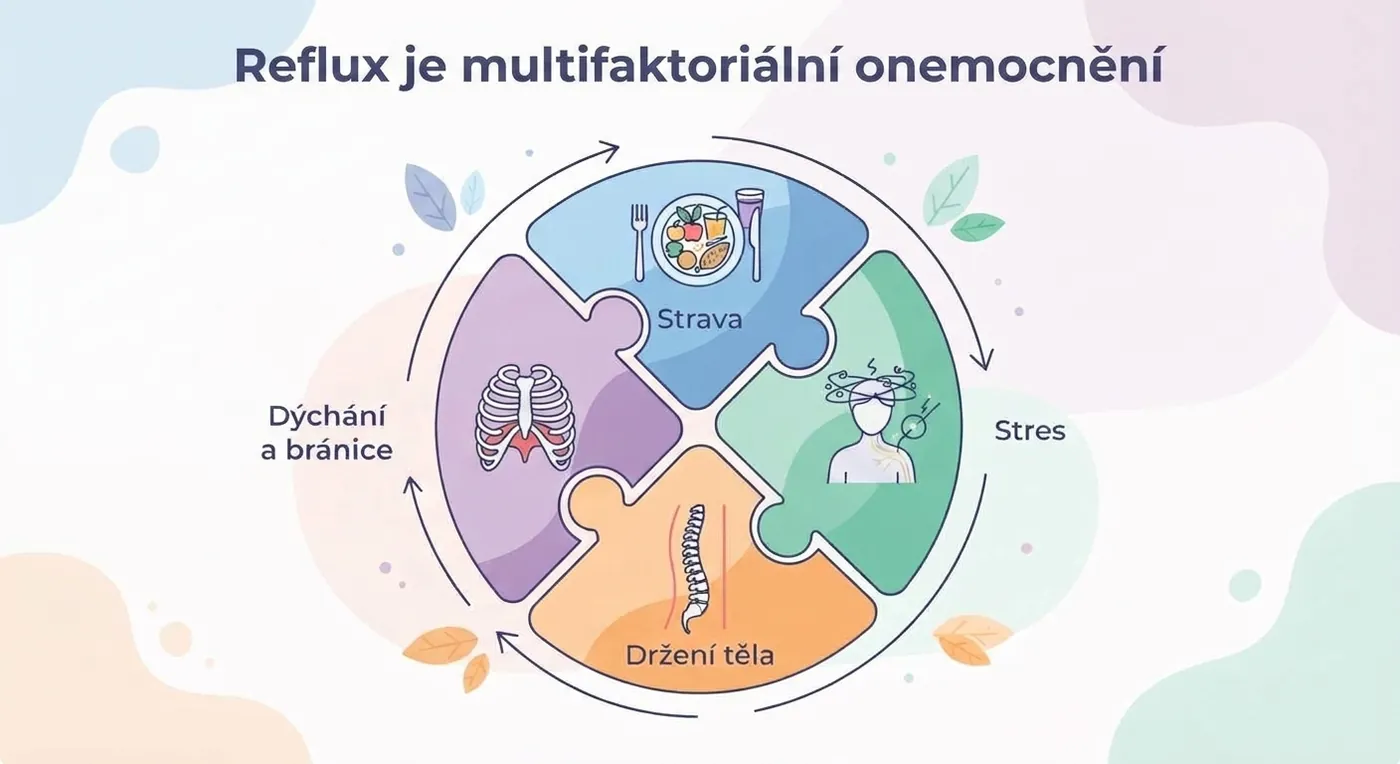
- Diet and eating habits. Irregular meals, big portions, heavy food, eating right before bed and eating in a hurry. More in Food as medicine and trigger.
- Stress and the nervous system. Today's chronic stress keeps the body under constant tension. More in When stress is behind your reflux.
- Posture and the musculoskeletal system. Slouching, a stiff chest and a compressed belly.
- Breathing mechanics and the diaphragm. Inefficient breathing that takes our key muscle out of action.
Let's look at exactly how exercise, breathing and the diaphragm influence reflux.
The key role of the diaphragm and breathing
From the point of view of anatomy and body mechanics, the diaphragm is absolutely essential. It is our main breathing muscle, but it also works as an anatomical valve for the oesophagus.
The diaphragm has an opening (the oesophageal hiatus) through which the oesophagus passes from the chest into the abdomen. When the diaphragm works well and has optimal muscle tone, it helps the lower oesophageal sphincter keep stomach juices where they belong — in the stomach.
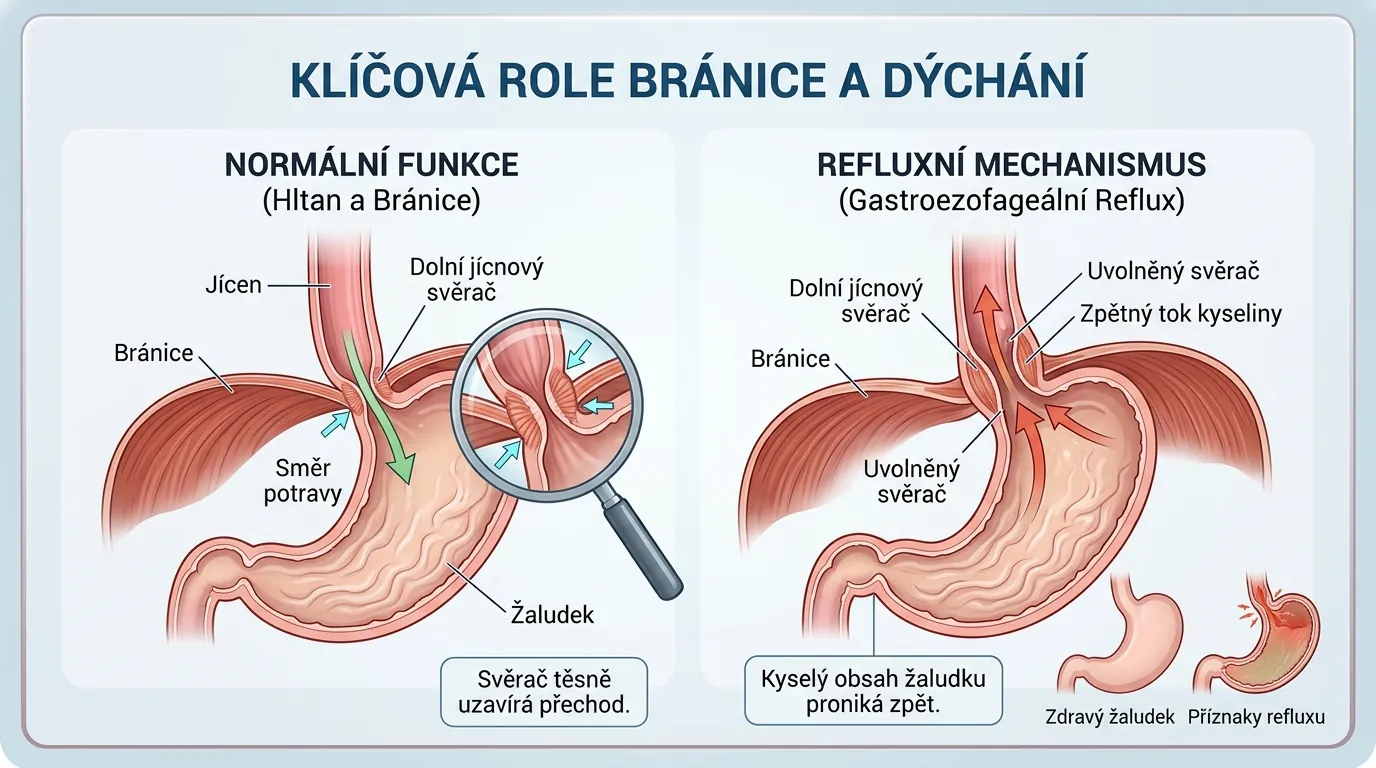
What happens when the diaphragm doesn't work? With chronic stress and poor posture, the diaphragm gets tense and stiff.
- We breathe shallowly — only into the upper chest and shoulders.
- A stiff diaphragm stops working properly and creates the wrong intra-abdominal pressure.
- The oesophageal valve loses its support and acid flows upwards easily.
How the nervous system controls your digestion
Digestion is directly controlled by the autonomic nervous system. It has two main branches:
- Sympathetic ("fight or flight"). Activated by stress; it speeds up breathing, tightens muscles and stops or slows digestion.
- Parasympathetic ("rest and digest"). Activated by relaxation; it calms the body and switches on proper stomach and gut activity.
If we live under constant stress, our body's engine runs in sympathetic mode. The stomach doesn't digest food efficiently, digestive enzymes lag behind, and a tight chest makes things even worse.
Breathing techniques and targeted relaxation are the fastest way to switch the nervous system back into parasympathetic mode and give the stomach room to work calmly.
Movement as a path to relief
You may be surprised how much the right kind of movement can do for reflux. It's not about hard cardio or lifting heavy weights (which can actually make reflux worse), but about balancing and mobilising exercise.
What exactly do we do?
- Opening the chest and mobilising the thoracic spine. We release the rib cage, which is often tight from sitting all day, giving the lungs and diaphragm room for full movement.
- Breathing into the lower ribs. We teach the diaphragm to work through its full range again. A good breathing pattern mechanically massages the internal organs and supports gut motility.
- Diaphragm massage. Releasing tension by hand along the rib arches, which quickly eases pressure in the upper abdomen.
- The hypopressive method. A special exercise technique working with negative pressure. It lowers intra-abdominal pressure, strengthens the deep stabilising system and supports good diaphragm function.
A path without medication is possible — but always together with your doctor
From my own experience and my clients', I know medication can help a lot in the acute phase. It is very important to have an exact diagnosis from your doctor and to know precisely what is going on. The right medication can calm the worst inflammation and give the oesophagus time to recover. What medication cannot do is release a stiff diaphragm, teach you to breathe well, or change how you react to stress or how you eat. I write more about this in Do you need medication for life?
In my practice I combine changes to diet, gradual new habits, breathwork, diaphragm release and mobility exercise. It is long-term work over several months. The clients who came to me with reflux have much milder symptoms today, and for many of them the symptoms have gone completely. Gradually reducing medication, however, always belongs in your doctor's hands.
Lucie Linková is a certified trainer and hypopressive-method instructor — not a doctor or physiotherapist. This article summarises her practice experience and published knowledge; it does not replace an examination or your doctor’s advice.
Reflux is your body's signal that it's time for a change. And the good news is: your body has an enormous capacity to regenerate when you give it the right tools.
More articles on reflux: Night-time reflux and how to raise your bed · Food and reflux · Reflux and medication · Reflux and stress
Choose the format that suits you: