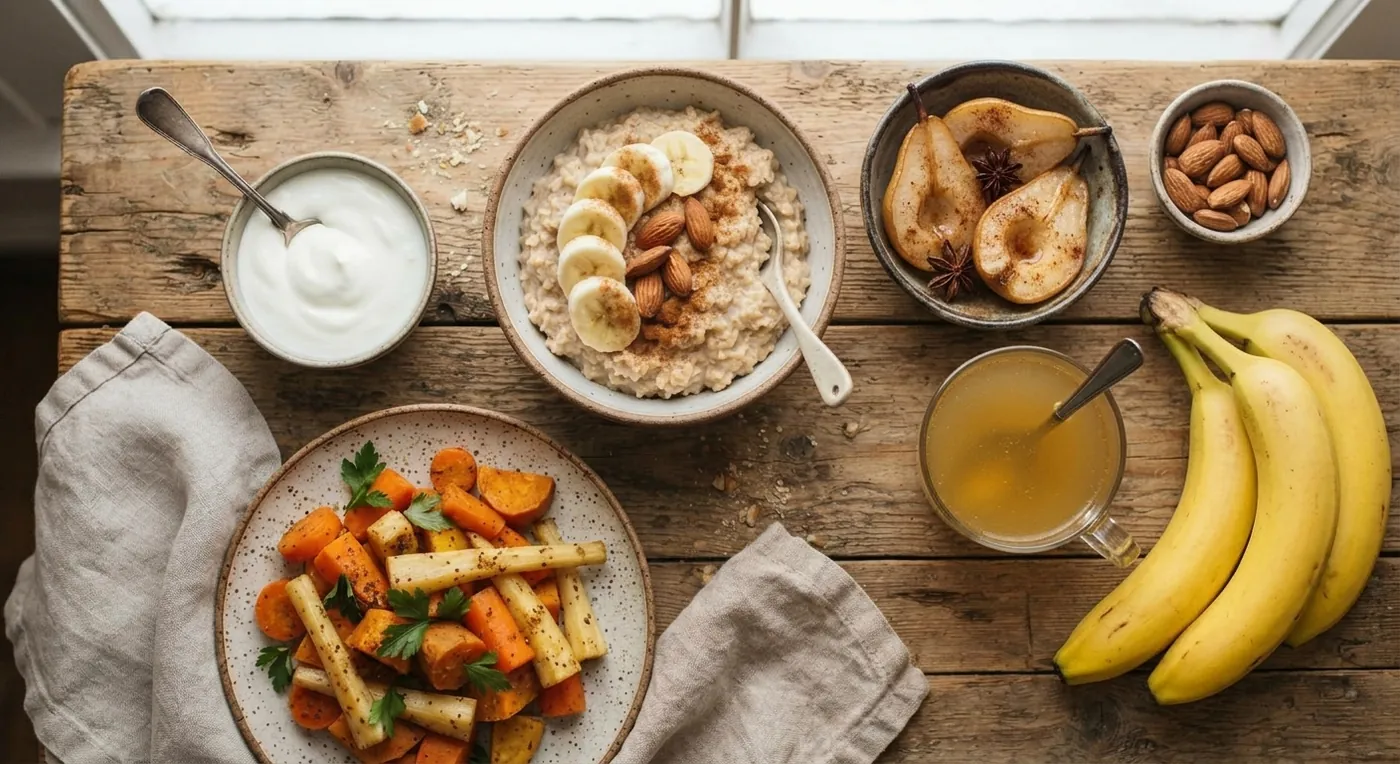
If you struggle with reflux, you may feel that food has become your enemy. Every bite comes with the worry that in an hour your throat will burn, your stomach will feel tight, or acid will come back up.
From my own experience and my work with clients, I know the aim of a reflux routine is not to live on dry bread and water. Food should be a joy and fuel for the body. But for it not to harm you, you need to understand how it affects the stomach and the lower oesophageal sphincter — and learn to work with it so it helps you digest without pain. Your body still needs good carbohydrates, fats and protein, vitamins and minerals.
In this guide we'll go through the foods that most often trigger reflux, the ones that sit heavy for most people, what soothes your stomach like a balm, and how to put your meals together through the day so you get enough nutrients without overloading digestion.
How food affects reflux
Food and drink affect reflux in two main ways:
- They irritate the lining directly or increase acidity. Low pH or irritants trigger excess hydrochloric acid in the stomach.
- They relax the oesophageal valve (sphincter). Some substances (fats, caffeine, mint) relax the smooth muscle of the lower oesophageal sphincter. It then doesn't close fully and acid flows freely upwards.
The most common triggers: what to cut out or limit for now
Every body is different and tolerance varies, but these food groups tend to be the most problematic with reflux:
- Coffee and caffeinated drinks. Caffeine stimulates stomach acid and relaxes the oesophageal sphincter at the same time. If you can't live without coffee, never drink it on an empty stomach — choose a good espresso with a little plant-based or lactose-free milk after a meal.
- Chocolate and cocoa. They contain caffeine, theobromine and a lot of fat — a combination that literally relaxes the sphincter.
- Citrus and very acidic fruit. Oranges, lemons, grapefruit or sour tomatoes directly irritate an already sensitive oesophageal lining.
- Garlic and raw onion. Their strong essential oils irritate the stomach wall and cause bloating and pressure.
- Cured meats, fatty and fried food. Fats stay in the stomach longest. They slow emptying, creating constant intra-abdominal pressure pushing upwards.
- Hot spices and mint. Hot spices irritate the lining, while the menthol in mint (for example in mint tea) strongly relaxes the oesophageal sphincter.
- Fizzy drinks and alcohol. Bubbles stretch the stomach from inside and the gas pushes acid towards the oesophagus. Alcohol relaxes the sphincter.
What sits heavy for most people (hidden burdens)
Besides the classic triggers, some foods and combinations may not exactly burn, but they are a big mechanical and chemical load for the stomach:
- Fresh yeasted pastries and fresh white bread. They keep rising in the stomach, produce gas and bloat it, which immediately raises intra-abdominal pressure.
- Pulses prepared the wrong way (lentils, beans, chickpeas). If not soaked, well cooked and skinned, they cause strong bloating and pressure on the diaphragm.
- Fatty meat with white flour (for example a creamy sauce with dumplings, or a fried schnitzel). Digesting such a meal takes many hours, the stomach is overloaded and acid has time to work its way up.
- Lots of raw vegetables at once. A big bowl of raw salad is hard to digest, takes up volume and is too "cold" and heavy for a sensitive stomach. Lightly cooked vegetables are better.
- Sweet desserts and sugar on an empty stomach. Sugar ferments quickly, feeds unhelpful gut bacteria and irritates the stomach wall into producing more acid.
A balm for the body: what the stomach loves
When you need to ease your body, give an irritated lining some rest and get energy without fear of heartburn, go for these foods:
- Oat and rice porridge. The perfect balm. Its soft, slimy texture protects the stomach wall and binds excess acid.
- Boiled and steamed root vegetables (carrot, parsnip, pumpkin, sweet potato). Gentle, easy to digest, and full of vitamins without irritation.
- Lean meat and broths. A slowly simmered chicken or turkey broth (without too much fat or onion) hydrates and nourishes.
- Ripe bananas, baked pears and stewed fruit. Non-acidic fruit that doesn't burden you, gives energy and tastes great.
- Plain yoghurt, kefir or a teaspoon of good honey. They support the microbiome and the gut's natural defences.
- Almonds (well chewed). Many people with reflux tolerate them well and find they calm an acidic stomach.
The key to success: routine, smaller portions and meal prep
Even the healthiest foods will harm you if you eat too much at once or irregularly. A large volume of food mechanically stretches the stomach, putting a lot of pressure on the oesophageal sphincter.
1. Smaller, regular portions. Eat smaller portions (for example 4–6 times a day). The stomach processes them quickly, without being overloaded, and doesn't produce excess acid.
2. Plan your day so you don't miss out on nutrients. A common mistake with reflux is cutting food back too much out of fear of pain. The body then suffers from undernourishment, fatigue and ravenous evening hunger.
- Breakfast: gentle but nourishing. Try oat or rice porridge with a pinch of cinnamon, a banana and a spoonful of almond butter.
- Mid-morning snack: easily digestible fruit (banana) or a small portion of plain yoghurt.
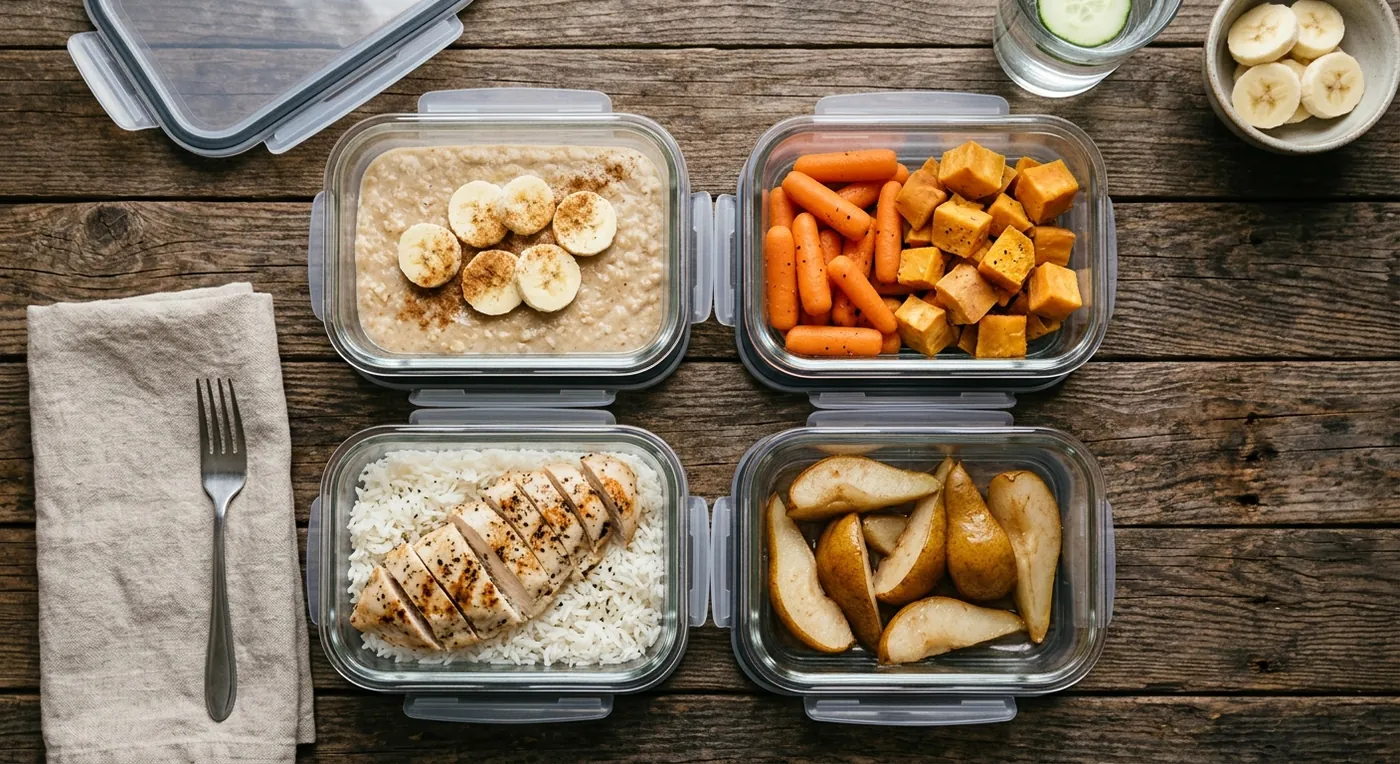
- Lunch: complete and balanced. For example, braised turkey breast with caraway, boiled rice and steamed carrots.
- Afternoon snack: a slice of sourdough bread with a little butter and turkey ham.
- Dinner: light, and eaten at least 4 hours before sleep. For example, roasted root vegetables with a piece of fish, or a smooth pumpkin soup.
3. The power of meal prep. If you work or are on the move all day, without preparing food in advance it's easy to fall into the trap of long hunger followed by overeating. Packing boxes for the next day gives you the certainty that you have exactly what your stomach needs to hand.
A practical summary for everyday life
- Eat calmly and chew. Digestion starts in the mouth. Chew every bite thoroughly and don't rush.
- Keep liquids apart from meals. Don't drink lots of water with a meal. Drink 20 minutes before eating or half an hour after.
- Think before bed. Always keep 4 hours without food and an hour without drinks before lying down. If hunger strikes, have just 2–3 teaspoons of plain yoghurt. After dinner, don't flop straight onto the sofa in front of the TV, squashing your belly — do some housework or a little exercise instead; light movement helps digestion. If you finish work late, have dinner there: by the time you get home, you've digested. More on night-time reflux in Why night-time reflux keeps you awake.
Lucie Linková is a certified trainer and hypopressive-method instructor — not a doctor or physiotherapist. This article summarises her practice experience and published knowledge; it does not replace an examination or your doctor’s advice.
Body memory and the recovery of the lining take time, so be patient. When you combine a gentle diet with regular movement, a released diaphragm and the right sleeping position, your stomach will thank you.
Choose the format that suits you: