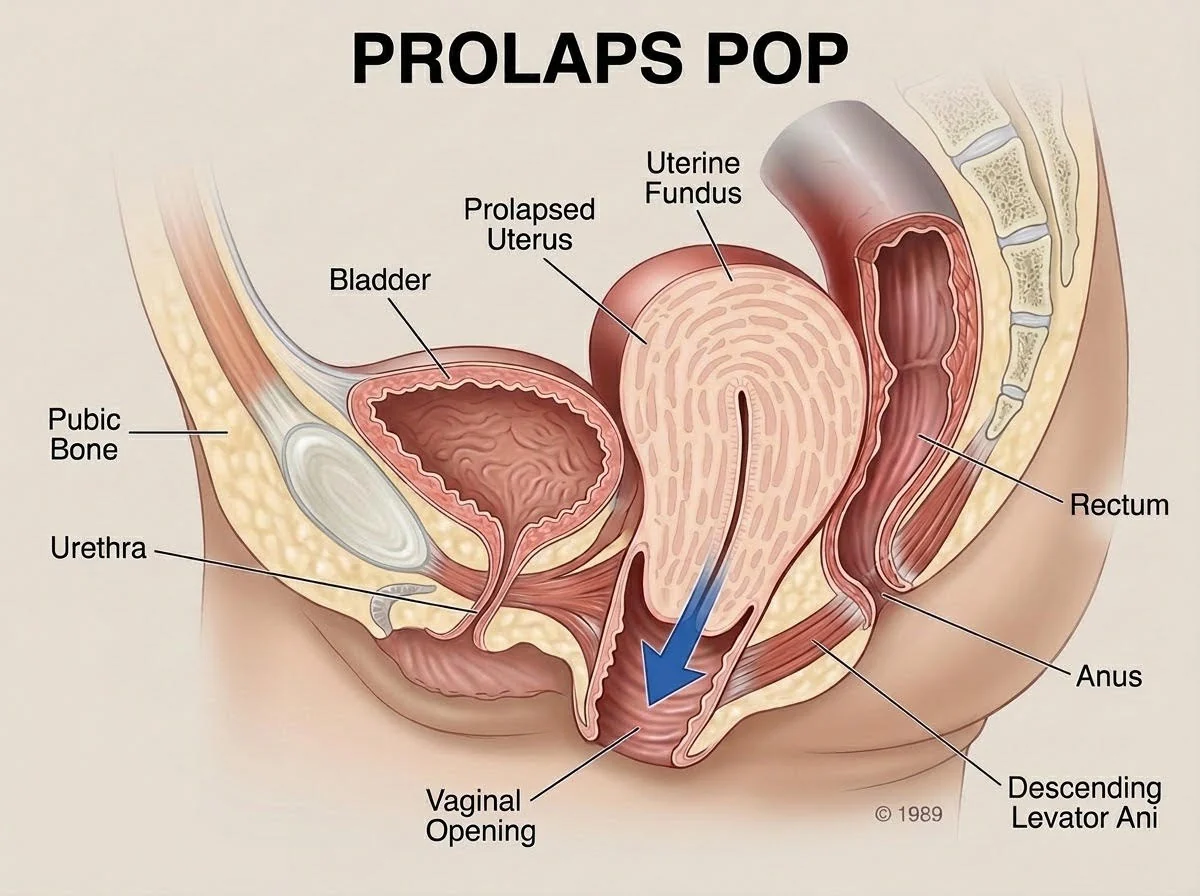
Vaginal prolapse is still a topic people talk about rather quietly. Yet it is a condition in which one of the pelvic organs — the bladder, uterus or rectum — descends into the vagina. Prolapse happens when the pelvic floor muscles and ligaments are weakened and slack and lose their ability to give the organs firm support.
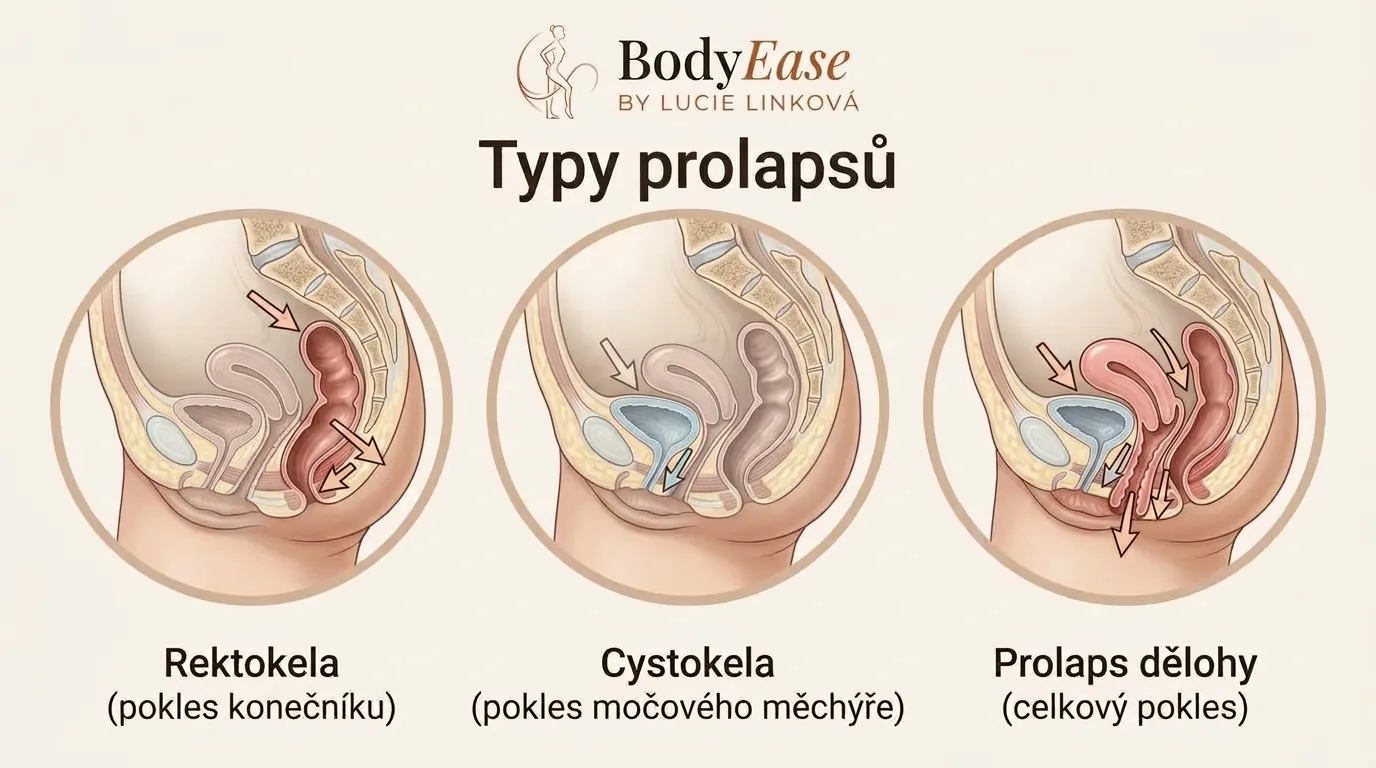
Depending on which organ is pushing down, we speak for example of a cystocele (dropped bladder) or a rectocele (dropped rectum). In more advanced stages an organ can descend as far as the vaginal opening, or even protrude from it.
Who is affected by prolapse
Although it's often discussed in relation to women after menopause, prolapse can affect women of any age.
- After menopause, hormonal changes play the main role, reducing tissue elasticity and the natural firmness of the pelvic floor.
- After a vaginal birth, the descent comes from excessive strain and damage to the connective tissue during pushing or in the postnatal weeks. Early, heavy physical load or carrying heavy weights, which sharply raise intra-abdominal pressure, also increase the risk.
Grades of prolapse
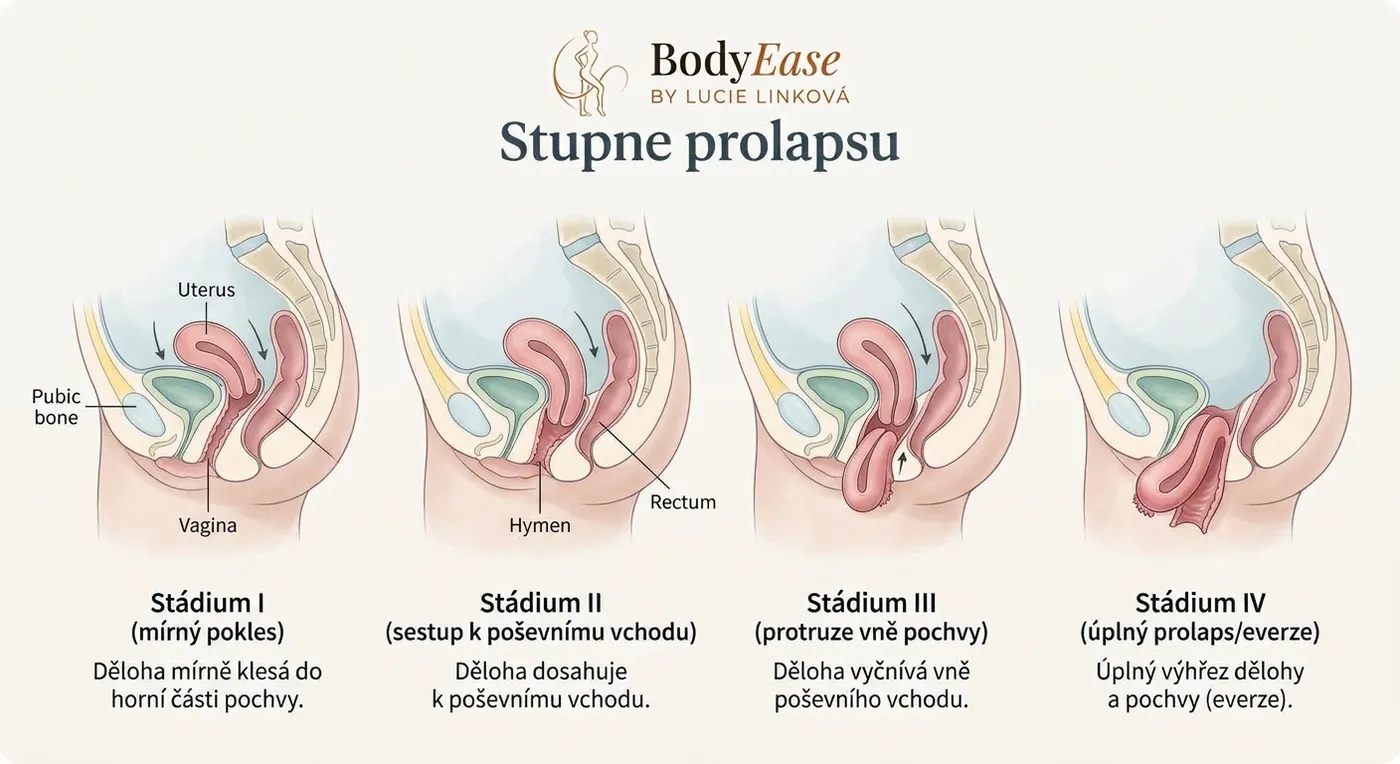
Doctors distinguish four grades:
- Grade 1 (mild): the organs descend slightly into the vagina.
- Grade 2 (moderate): the organs have dropped to the level of the vaginal opening.
- Grades 3 and 4 (severe): the organs extend beyond the vaginal opening. In these cases surgery is often indicated.
How prolapse shows up in everyday life
Descending pelvic organs can make life really uncomfortable. The most common symptoms include:
- A feeling of pressure, heaviness or dragging in the lower belly and vagina.
- A feeling that you're "sitting on a small ball" or that something is falling out.
- Leaking urine when coughing, sneezing or moving, or problems with bowel movements.
- Discomfort or pain during sex.
- Symptoms tend to be milder in the morning and get worse as the day goes on and you tire.
The problem with classic crunches
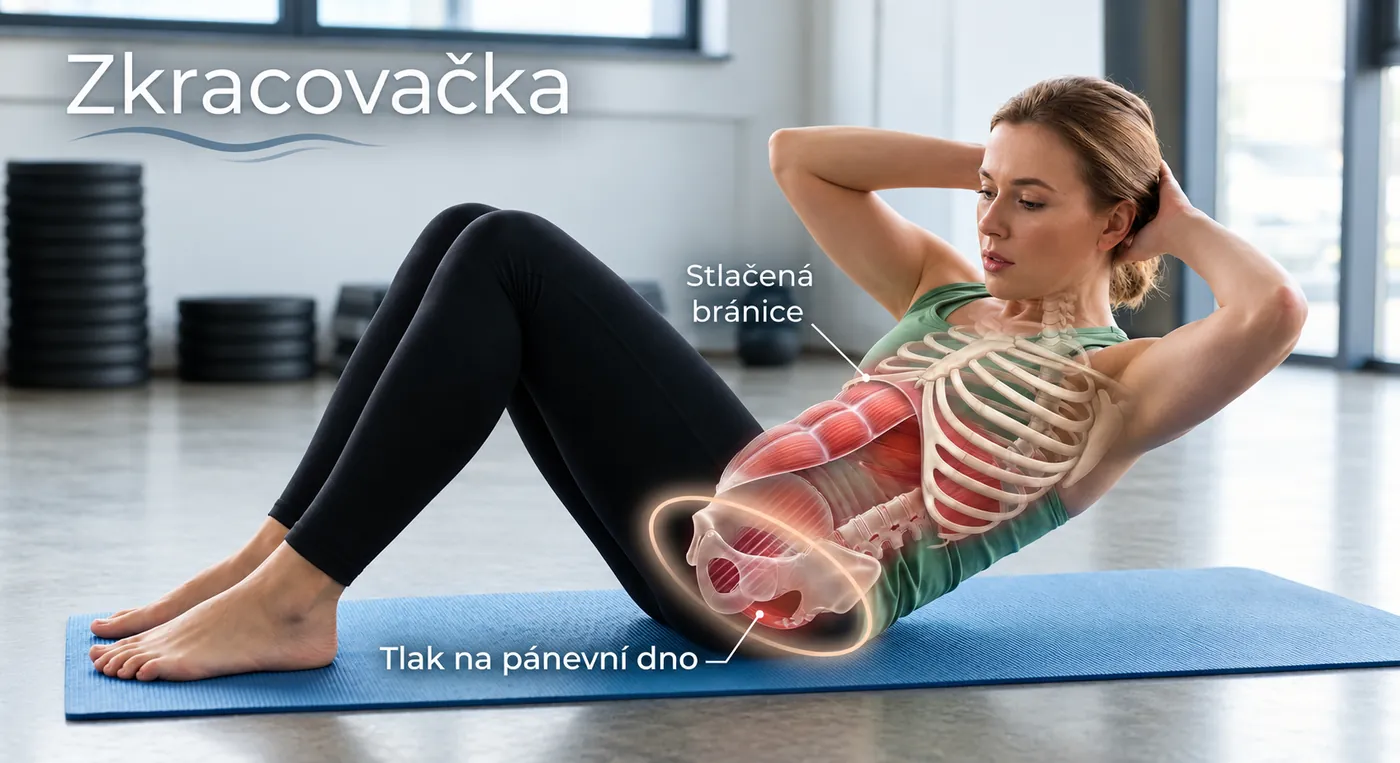
As you can see in the picture, during a crunch or sit-up the belly bulges upwards — and what you can't see, but can feel, is the intra-abdominal pressure going down onto the pelvic floor. I don't recommend these exercises with any type of prolapse.
Healthy women can do them, because their abdomen responds adequately to the rise in pressure. With a prolapse, though, intra-abdominal pressure is already excessively high and presses on the weakened pelvic floor. A woman may then unknowingly start doing classic ab exercises in a sculpt or strength class and make the problem worse. The idea is often that you need to train for strength to get stronger. But the opposite is true: what's needed is to restore the teamwork of the diaphragm, pelvic floor, abdomen and back muscles.
How the BodyEase hypopressive method can help
The key to the solution — and to effective prevention — is understanding that the pelvic floor doesn't work alone. It is connected with the diaphragm, the deep stabilising system and overall posture. Exercise in the BodyEase concept is an excellent tool for helping the organs find support.
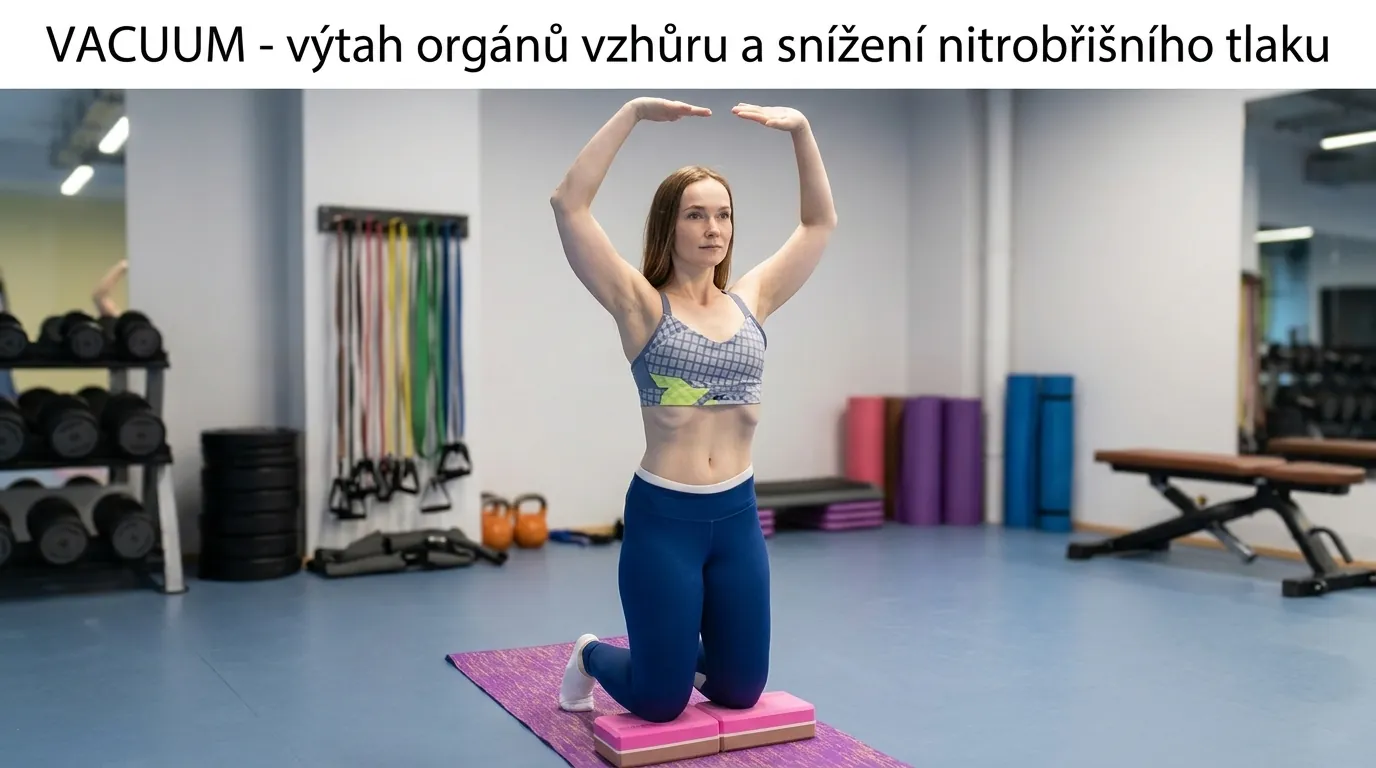
As you can see in the picture, the lifts flatten the belly, which lowers intra-abdominal pressure — and during the exercise you can feel the pelvic floor drawing upwards. That's why this exercise is so effective. A woman may feel relief in the pelvic area very quickly, but it is very individual. Bigger results come after about 2 months of exercising at least 10 minutes a day, or 3 times a week for 20 minutes. The pelvic floor needs its time.
How the BodyEase concept works
During exercise we use specific breathing techniques and work with the diaphragm. When the diaphragm relaxes and, in the breath pause, we perform the so-called aspiration (a negative-pressure "lift"), intra-abdominal pressure drops sharply. This mechanism creates a natural suction that gently draws the pelvic organs (bowel, uterus, bladder) upwards.
With regular BodyEase practice (ideally several times a week) you can achieve:
- higher resting muscle tone in the deep abdominal muscles and the pelvic floor,
- better handling of everyday pressure spikes (coughing, lifting things),
- better support for the organs — with grade 1 and 2 prolapse, symptoms can ease significantly,
- good results after surgery too (for example after a hysterectomy), when the remaining support structures need strengthening and the pelvis protecting from further descent.
If you suspect a prolapse, have its grade assessed by a gynaecologist. Whether you need surgery or a pessary is your doctor's decision; exercise is a great complement and prevention.
Lucie Linková is a certified trainer and hypopressive-method instructor — not a doctor or physiotherapist. This article summarises her practice experience and published knowledge; it does not replace an examination or your doctor’s advice.
Choose the format that suits you: