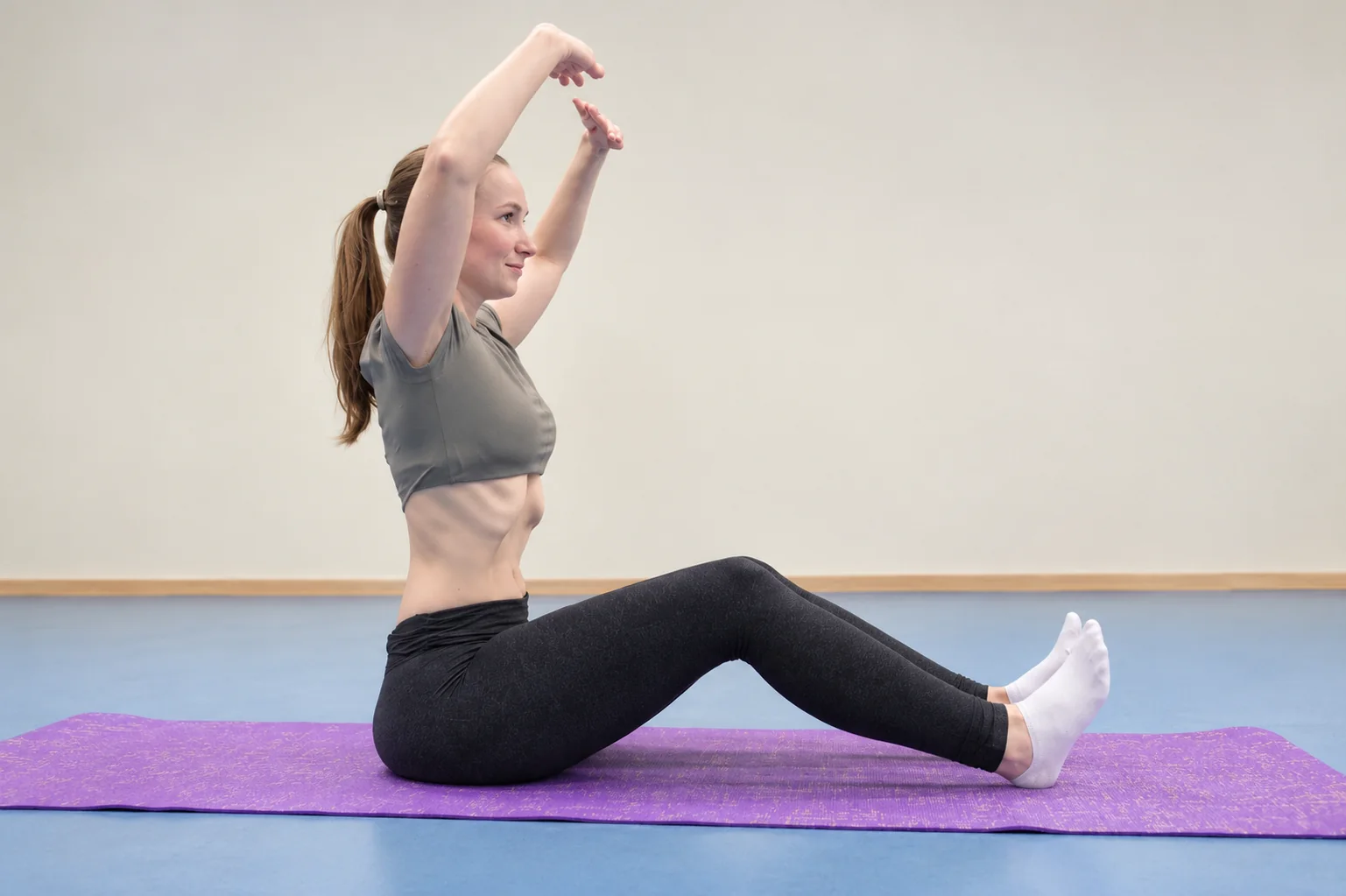
You may already have come across the name hypopressive method. In Western Europe and South America the system is practised as Low Pressure Fitness, and for years it has been among the sought-after methods in both physiotherapy and sport.
In this article I would like to explain how the method works, where its appeal lies, and what it can bring your body.
How the practice that changed postnatal rehabilitation came about
Hypopressive gymnastics was created in 1980 by the Belgian physiotherapist and researcher Dr Marcel Caufriez. He described its precise rules and made it a turning point in postnatal care for women.
The practice gradually spread into fitness and sports physiotherapy. Caufriez’s students and colleagues followed up with further research, which described:
- relief in stress urinary incontinence,
- a drop in intra-abdominal pressure and the release of a tight diaphragm,
- an increase in the resting tone of the pelvic floor and the deep abdominal muscles.
The hypopressive method has precise rules for posture, breathing phases and rhythm. Its most substantial contribution is to the deep stabilising system. In athletes we also see improvements in breathing capacity and endurance.
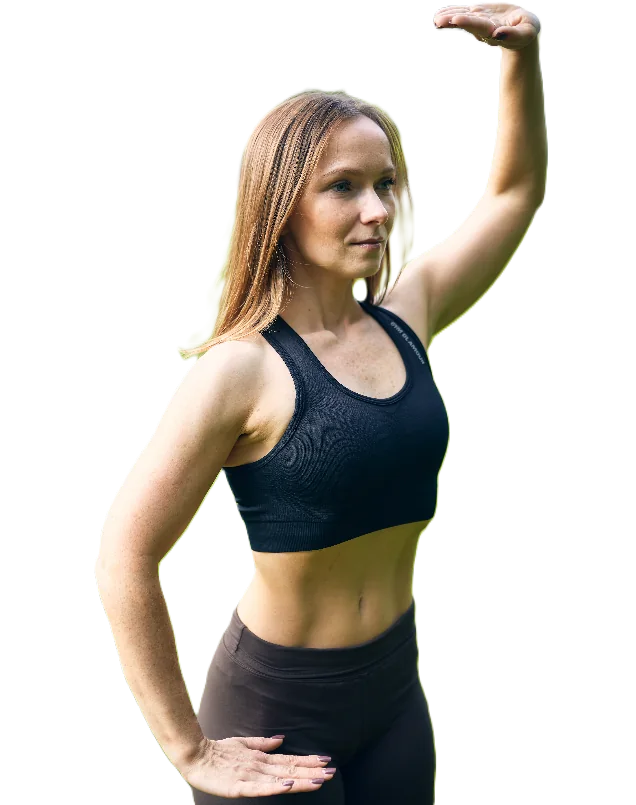
That is why I love this method and recommend it as exercise after birth, with organ prolapse or urine leakage, and as prevention. A welcome bonus: thanks to the activation of the transverse and oblique abdominals, the waist narrows naturally without deliberately pulling the belly in.
How the hypopressive manoeuvre is performed
The heart of the method is the hypopressive manoeuvre — creating internal negative pressure during the breath pause after a full exhale, with empty lungs.
One cycle looks like this:
- Preparing with the breath. Two or three deep diaphragmatic breaths. Inhale through the nose for about two seconds, exhale through the mouth for four — breathing out fully, with a relaxed jaw and lips.
- The breath pause. Once all the air is out of the lungs, stop breathing.
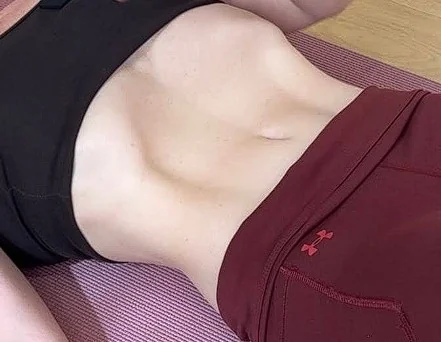
- The manoeuvre. Without inhaling, expand the ribcage and open the ribs as if you wanted to breathe in, but let no air enter. The abdominal wall draws in characteristically and the navel travels upward.
- Negative pressure at work. In this state negative pressure forms in the abdominal and pelvic cavity, drawing the pelvic organs upward. Through the nervous system the pelvic floor and the deep abdominal muscle contract reflexively.
- Returning to the breath. After one to twenty seconds in apnoea, inhale slowly through the nose and let the abdominal wall fill. Rest for two or three breaths, then continue to the next set.
The rules of correct posture
We use a range of positions — from lying down through kneeling to standing and dynamic variations. In every position we watch these key principles:
- lengthening upward from the crown of the head,
- gaze straight ahead,
- active standing with three-point support through the feet,
- engaging the lower scapular stabilisers — shoulders away from the ears, shoulder blades wide,
- weight shifted slightly forward,
- a relaxed abdomen before the negative pressure begins.
Who hypopressive exercise suits
- women after birth, for the recovery of the abdominal wall and pelvic floor,
- women planning another pregnancy,
- women in perimenopause and menopause,
- clients with pelvic floor dysfunction — it helps with prolapse of the uterus, bladder or rectum, and with urine leakage and constipation,
- women with diastasis or a weakened abdomen, including after surgical or gynaecological procedures,
- people with back pain and poor posture,
- athletes, especially in sports with landings and impact such as running, dance or tennis,
- people with reflux or other digestive discomfort,
- men who want to engage their core intelligently.
When to leave the practice alone
Safety always comes first with me. Because holding the breath produces short-term changes in blood pressure and pulse, the hypopressive apnoea is not suitable for:
- pregnant women,
- people with high blood pressure,
- women shortly after having an intrauterine device fitted — I recommend waiting around five months,
- patients with severe cardiac or respiratory failure, an aneurysm or cardiovascular disease,
- people taking blood thinners with a high risk of bleeding,
- people with unexplained abdominal pain or acute inflammation in the abdominal cavity,
- patients with epilepsy,
- women with very heavy and painful periods — here we always go by how you feel,
- people with a hiatal hernia, where individual guidance is needed so that positions can be adapted to avoid reflux.
If you recognise yourself in any of these, we will talk it through before your first session and find a safe variation — or I will point you to the specialist who is right for your situation.
Lucie Linková is a certified trainer and hypopressive-method instructor — not a doctor or physiotherapist. This article summarises published research and practice experience; it does not replace an examination or your doctor’s advice.
What regular practice brings
The method is technically demanding, so I recommend starting under the guidance of a certified instructor who can watch your positioning and the length of your apnoea.
The ideal dose is around ten minutes a day, or three to six sets in one position with honest recovery breaths. With regular practice, clients describe the first felt changes after about three weeks.
The main benefits, briefly:
- supports the correct position of the pelvic organs,
- narrows the waist by firming the transverse abdominis,
- supports the pelvic floor and its resting tone,
- improves lung capacity and breathing resilience,
- releases a tight diaphragm and helps posture,
- gives the intestines a gentle massage and supports peristalsis.
Would you like to learn the method properly and safely?
Take a look at my sessions and courses. I will be glad to guide you through the whole process, step by step.
Choose the format that suits you: