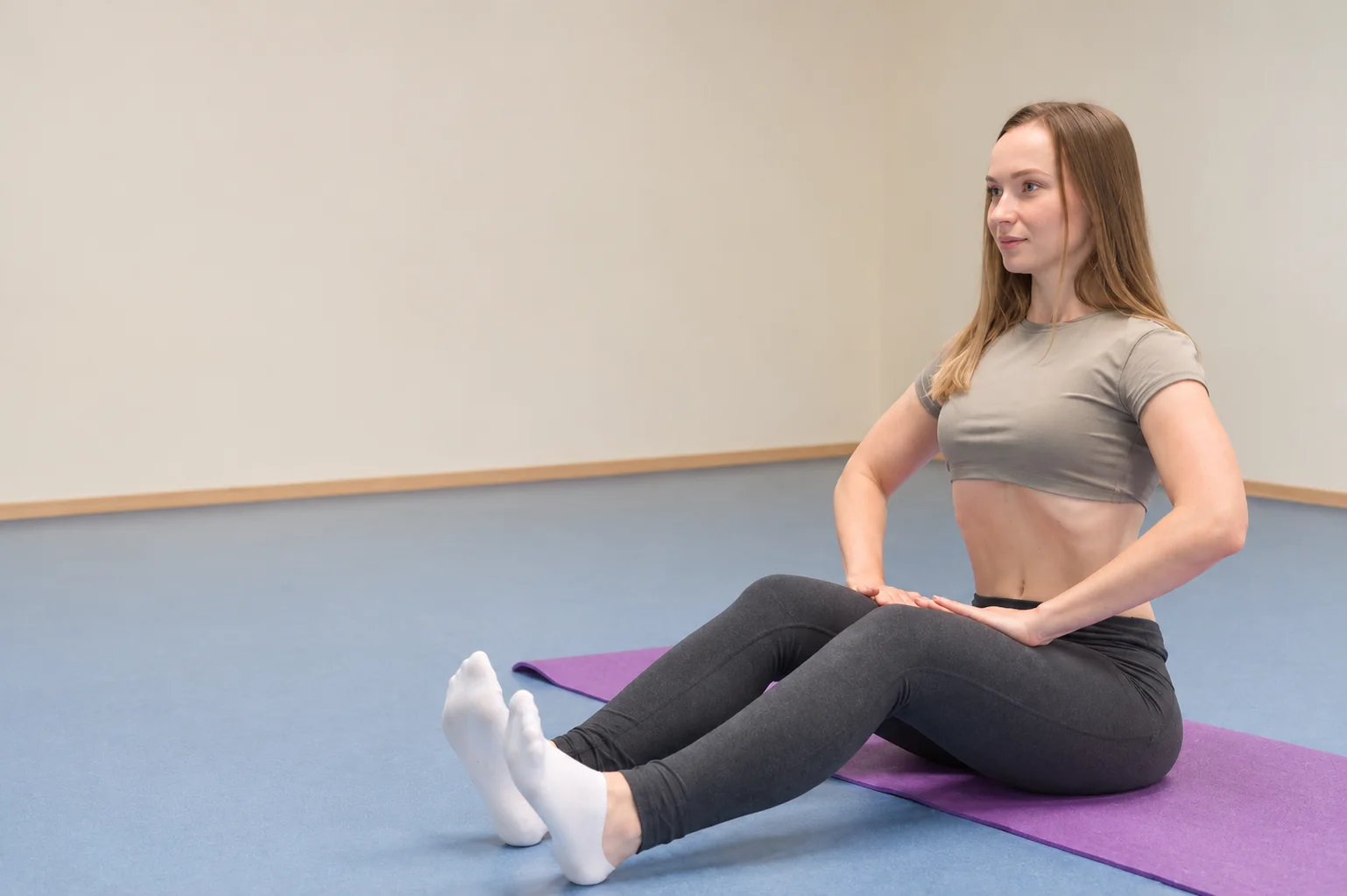
You may have heard that a healthy pelvic floor is simply a matter of “doing your Kegels” and squeezing. But what if there were another way entirely — without the clenching, and with a deeper, more natural effect?
The hypopressive method is a specific postural and breathing practice built around breath pauses (apnoea). During these pauses intra-abdominal pressure drops markedly, and the deep abdominal muscles and pelvic floor contract reflexively and completely involuntarily — the lift, or vacuum. The resulting negative pressure draws the pelvic organs upward, which is precisely why the method is studied in women with pelvic organ prolapse.
With regular practice we gradually release excess tension in the diaphragm while raising the resting tone of the deep stabilising system. The usual result is a narrower, firmer, more active waist — without ever deliberately sucking the belly in.
This is not a passing fad
Although the hypopressive method has only lately become a talking point, its underlying principles have been with us for a very long time.
Thousands of years in yoga. The yogic tradition has used a manoeuvre called Uddiyana Bandha — the yogic vacuum — for millennia, to mobilise the organs, strengthen the breathing muscles and improve diaphragm mobility. Modern research confirms that the technique increases activation of the transverse abdominis and lowers pressure in the large intestine.
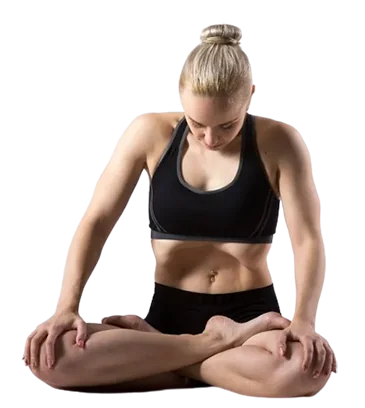
The bodybuilding era of the 1970s. In the late seventies bodybuilders — Arnold Schwarzenegger most famously — adopted the technique as the “stomach vacuum”, using it on stage to visually narrow the waist and emphasise the ribcage.

The birth of the modern method. The modern hypopressive method was developed in Europe in the 1980s by Dr Marcel Caufriez. It was created specifically as a non-invasive technique for the recovery of women after birth who were dealing with pelvic organ prolapse or urine leakage. The literature of that period often calls it hypopressive gymnastics.
How the hypopressive apnoea actually works
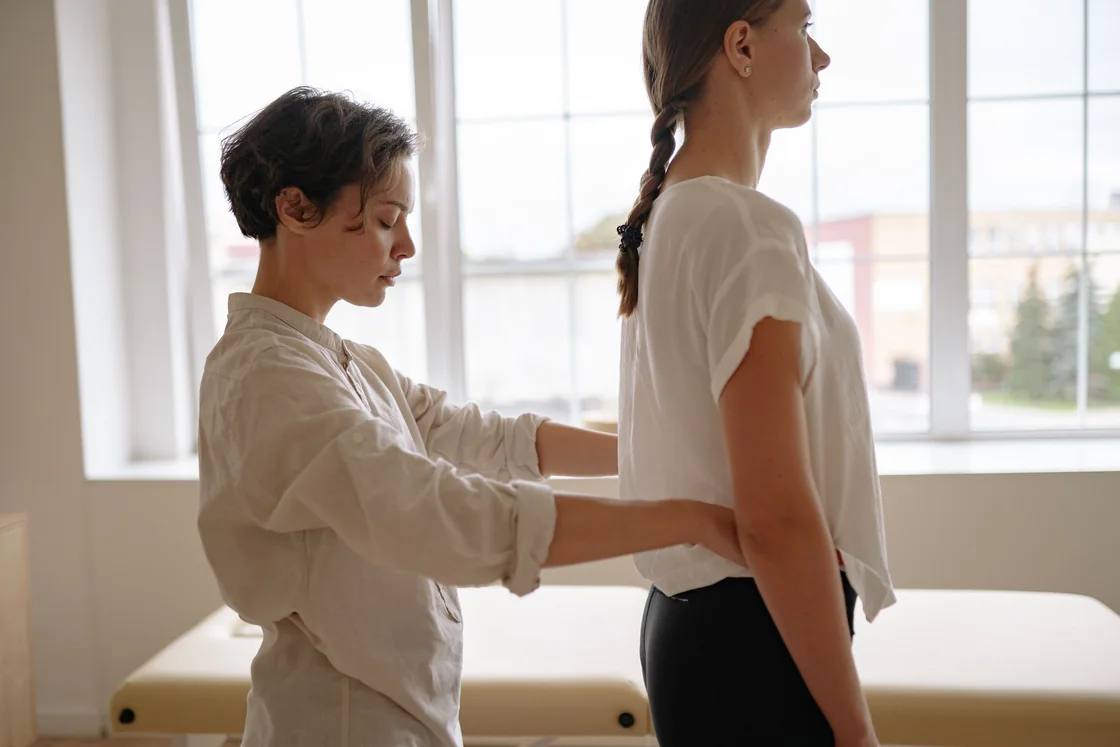
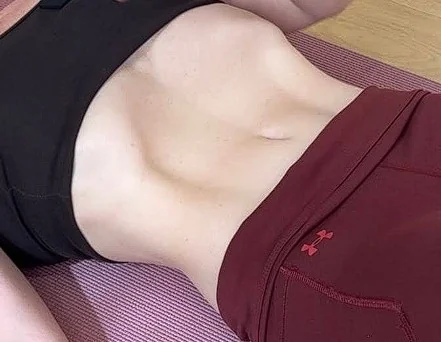
The heart of the practice is the hypopressive apnoea. After a full exhale you hold the breath, close the glottis, and use the intercostal muscles and the serratus anterior to expand the ribcage as if inhaling — but without letting any air in, and with the rectus abdominis completely relaxed.
This marked change of pressure in the chest lifts the relaxed diaphragm and lowers the pressure throughout the abdominal and pelvic cavity.
What the research has measured
What does modern science say about this technique? Studies have described concrete physiological changes.
1. The pelvic organs lift. Using ultrasound, Latorre et al. (2011) showed that the pelvic organs physically rise during the apnoea. The angle between the uterus and the vagina changes from 31° to 45° under negative pressure. The study also described a widening of the angle between the urethra and the vaginal wall, caused by the lifting of the bladder.
2. Muscles engage automatically, without conscious squeezing. Latorre et al. (2011) and Navarro et al. (2017) documented a pronounced lift of the pelvic floor muscles achieved purely reflexively, with no voluntary contraction. Work by Paterna & Rial (2016), Navarro et al. (2017) and Ithamar et al. (2017) confirmed increased activation of the deep core — specifically the transverse abdominis and the internal oblique.
Changing the rules: care after birth
During the hypopressive apnoea the pelvic organs and muscles lift, intra-abdominal pressure falls, and the activity of the deep core rises naturally. All of it without pushing or clenching.
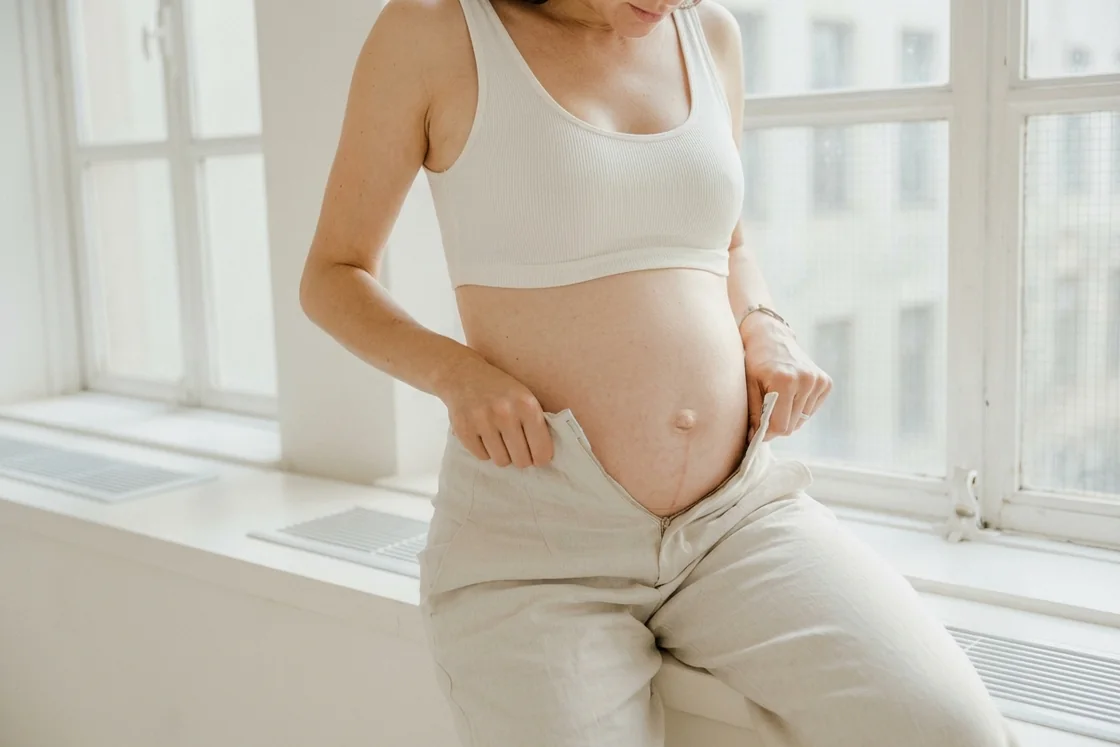
Hypopressive work turns the long-standing practice of Kegels somewhat on its head, approaching pelvic floor dysfunction from above rather than from below.
As an instructor of the method, I can say from my own practice that telling every woman to “just do your Kegels” is not enough. I have met many clients with pelvic organ prolapse for whom classic isolated training simply did not deliver.
When research shows us that the hypopressive method lifts the pelvic organs and engages the deep abdominals automatically — might it not be the missing piece of the puzzle?
Not a magic pill, but a useful tool
Let us be honest: the hypopressive method is not a universal cure for everyone.
During apnoea there are changes in heart rate, blood pressure and cardiac output. For a healthy person this is a natural physiological response. People with untreated high blood pressure or chronic obstructive pulmonary disease should be careful and practise only under expert supervision or in adapted variations.
For healthy women with pelvic organ prolapse or a weakened pelvic floor, hypopressive work tends to be a very good choice. The feedback I get from clients is good — they describe relief from pressure and discomfort, and better digestion as a welcome bonus.
Does this mean we should abandon Kegels altogether? Certainly not. Targeted pelvic floor training — whether strengthening or releasing — remains an important part of physiotherapy. Adding the hypopressive method as a further pillar simply makes sense.
Lucie Linková is a certified trainer and hypopressive-method instructor — not a doctor or physiotherapist. This article summarises published research and practice experience; it does not replace an examination or your doctor’s advice.
Start today
Would you like to give your body care without unnecessary tension? Choose the format that suits you best and take the first step.
Choose the format that suits you:
Sources
- Caufriez, Fernandez & Heimann (2007) — pressure comparison during hypopressive exercise.
- Latorre et al. (2011) — ultrasound study of pelvic organ position during apnoea.
- Paterna & Rial (2016) — hypopressive training as an alternative for abdomino-pelvic re-education.
- Ithamar et al. (2017) — electromyographic analysis of abdominal and pelvic floor muscles.
- Navarro et al. (2017) — muscle response during hypopressive exercise measured by ultrasound.
- Bellido-Fernández et al. (2018) — effect of the hypopressive method on lower back pain.