When we hear "bad posture", most of us picture a stiff neck, a sore lower back or a hunched back at the computer. But few people know that our everyday stance has a major impact on an area we so rarely talk about — the pelvic floor.
How are the two connected, and why should you care?
The body as connected vessels
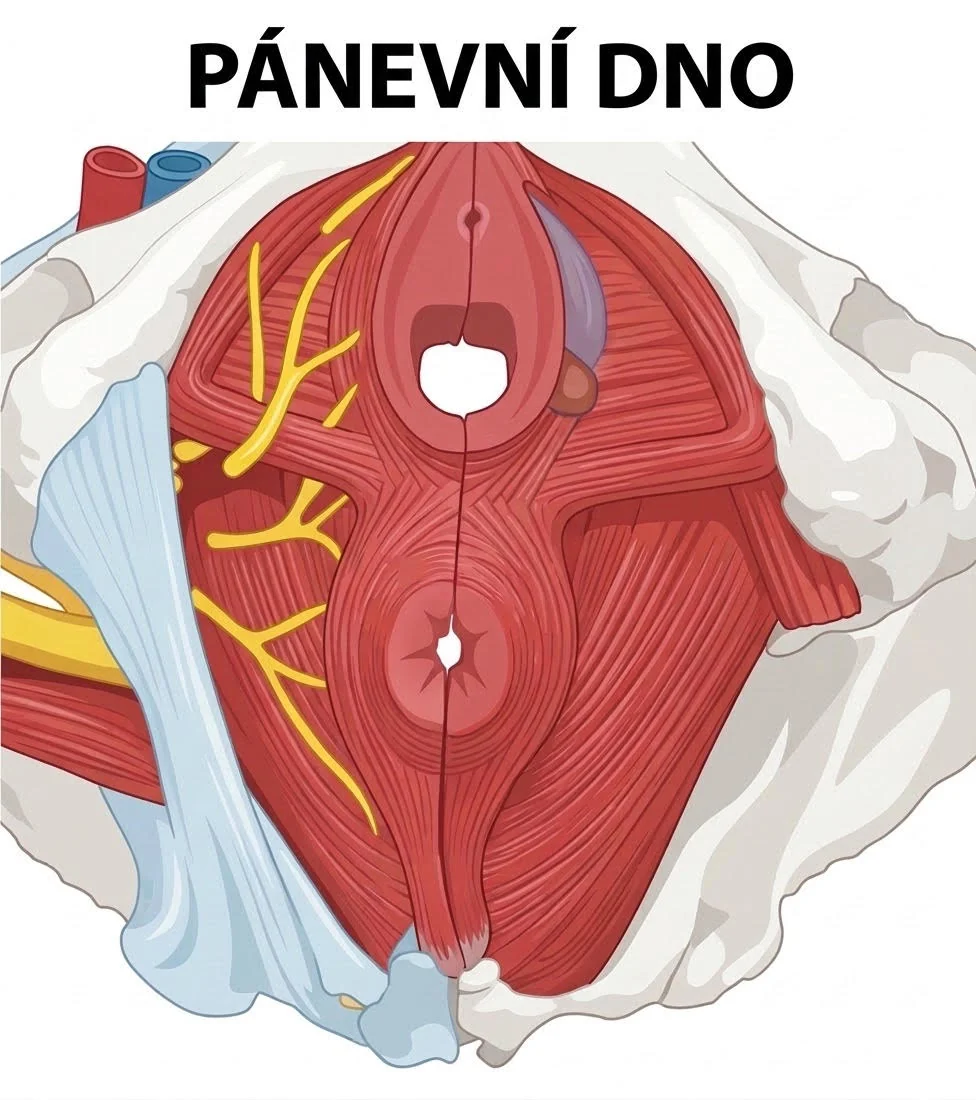
The pelvic floor is a complex network of muscles and ligaments at the bottom of the pelvis. You can picture it as an elastic net carrying the weight of the internal organs. Its activity changes constantly depending on our position — lying down it rests, while sitting and standing it shifts up a gear.
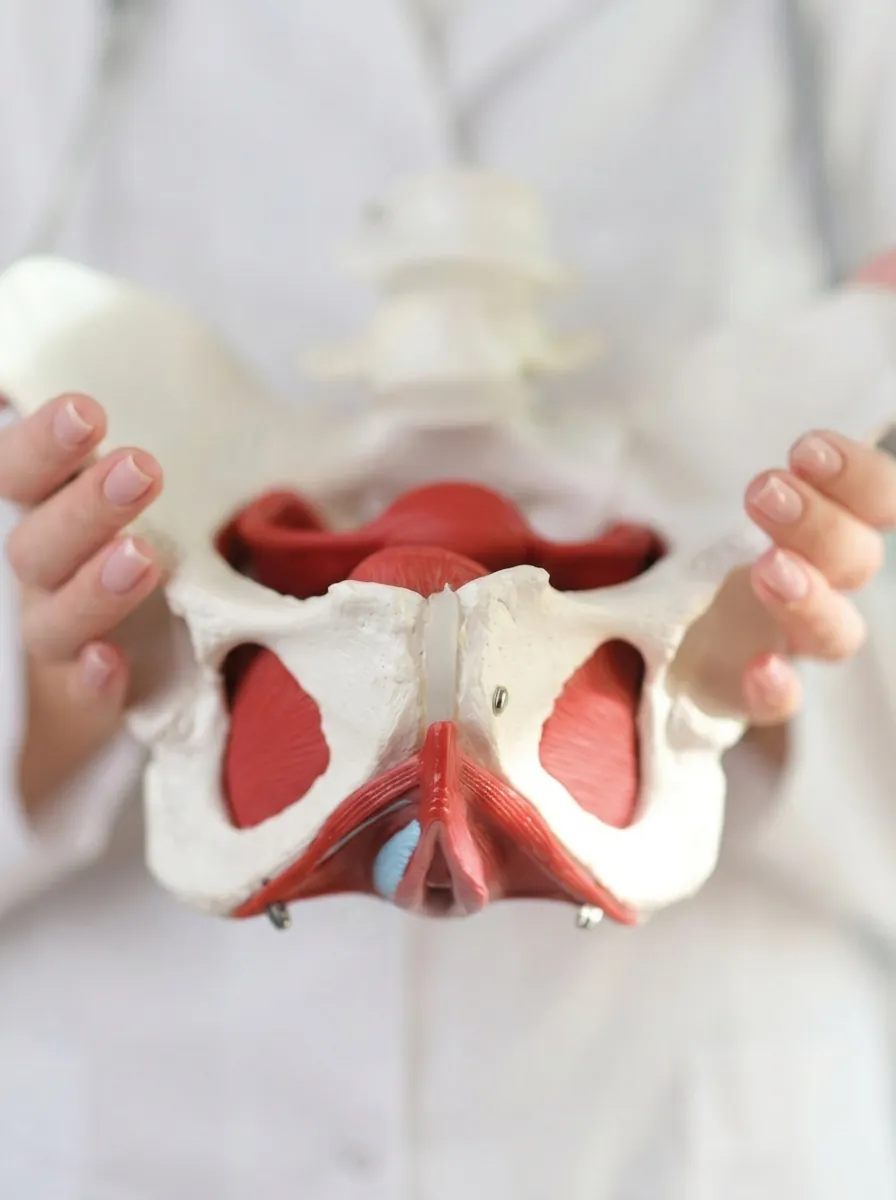
Standing and sitting is exactly when gravity comes into play. It constantly pushes the abdominal organs downwards, and the pelvic floor has to work non-stop to keep them in place.
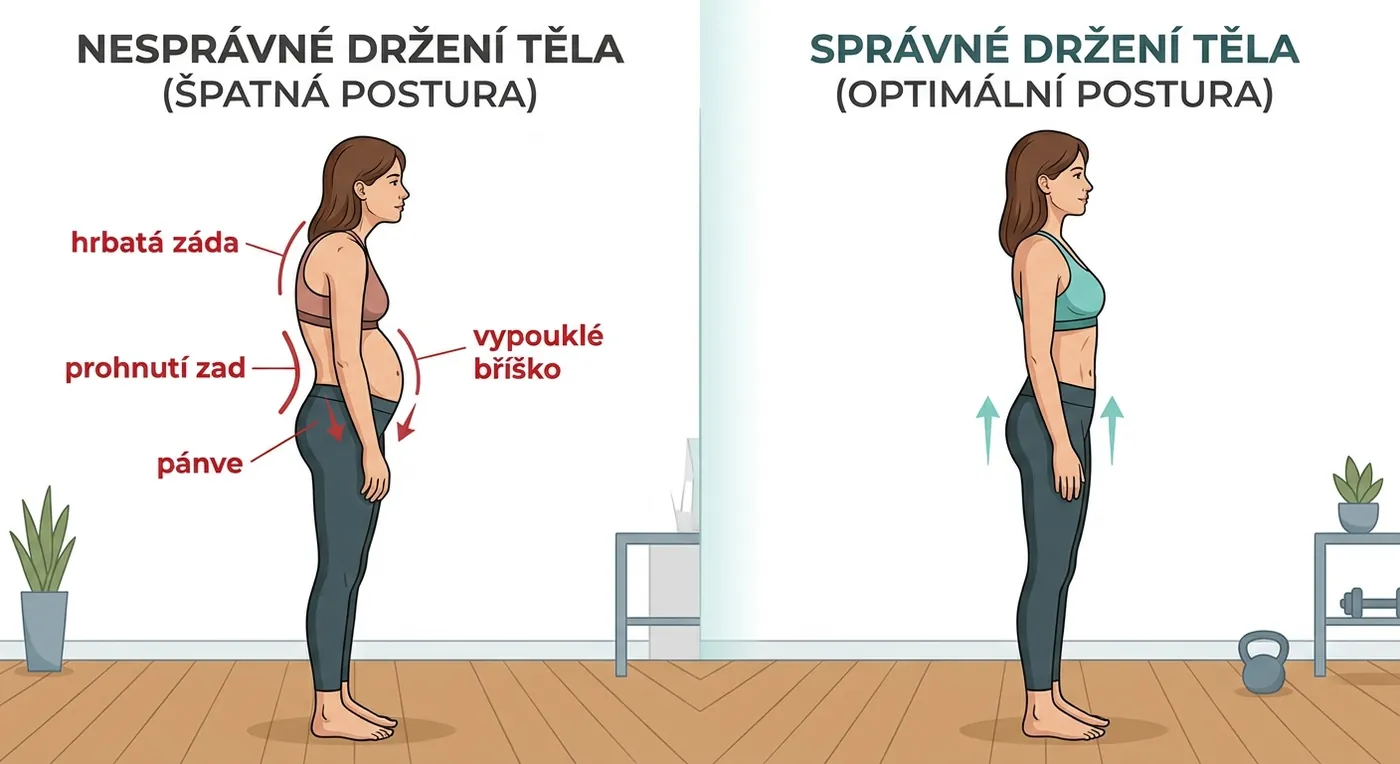
But if we spend most of the day in a poor position — slumped on a chair or arched in the lower back —, the body loses its natural support. The pelvic floor muscles then work at a disadvantageous angle and gradually weaken. These muscles don't work in isolation; they form a team with the diaphragm, the abdominal wall and the back. For this team to work well, it needs just one thing: the spine and pelvis in a neutral, balanced position.
When a bad habit becomes the rule
Slouching once in a while or sitting badly won't hurt your body. The problem starts when we spend months and years in poor positions.
In that environment the pelvic floor loses its ability to respond flexibly to changes in intra-abdominal pressure. And when load comes — ordinary walking, sport, lifting heavy shopping, or even a simple sneeze or cough —, the overloaded muscles can no longer properly hold the bladder, uterus or rectum. That leads to problems such as reduced stability or urine leakage.
How to bring balance back to your body and pelvic floor
The basis is learning to sense your body and adjusting small daily habits:
- Working with breath. Breath is our best ally. A good breathing pattern can distribute intra-abdominal pressure so it doesn't overload the bottom of the pelvis. Learn to breathe smoothly and don't hold your breath under load.
- Conscious sitting. Whenever you sit, find your sitting bones (the two bony points under your buttocks) and rest evenly on them. Come away from the backrest and bring your pelvis into neutral (neither tipped forward nor tucked under). At that moment you'll feel the deep transverse abdominal muscle (transversus abdominis) switch on naturally — a key partner for the pelvic floor. When standing up from a chair, hinge at the hips and keep your back straight.
- Regular rest. If you put your body under physical load, don't forget breaks. Muscles need time to relax and recover.
The BodyEase hypopressive method
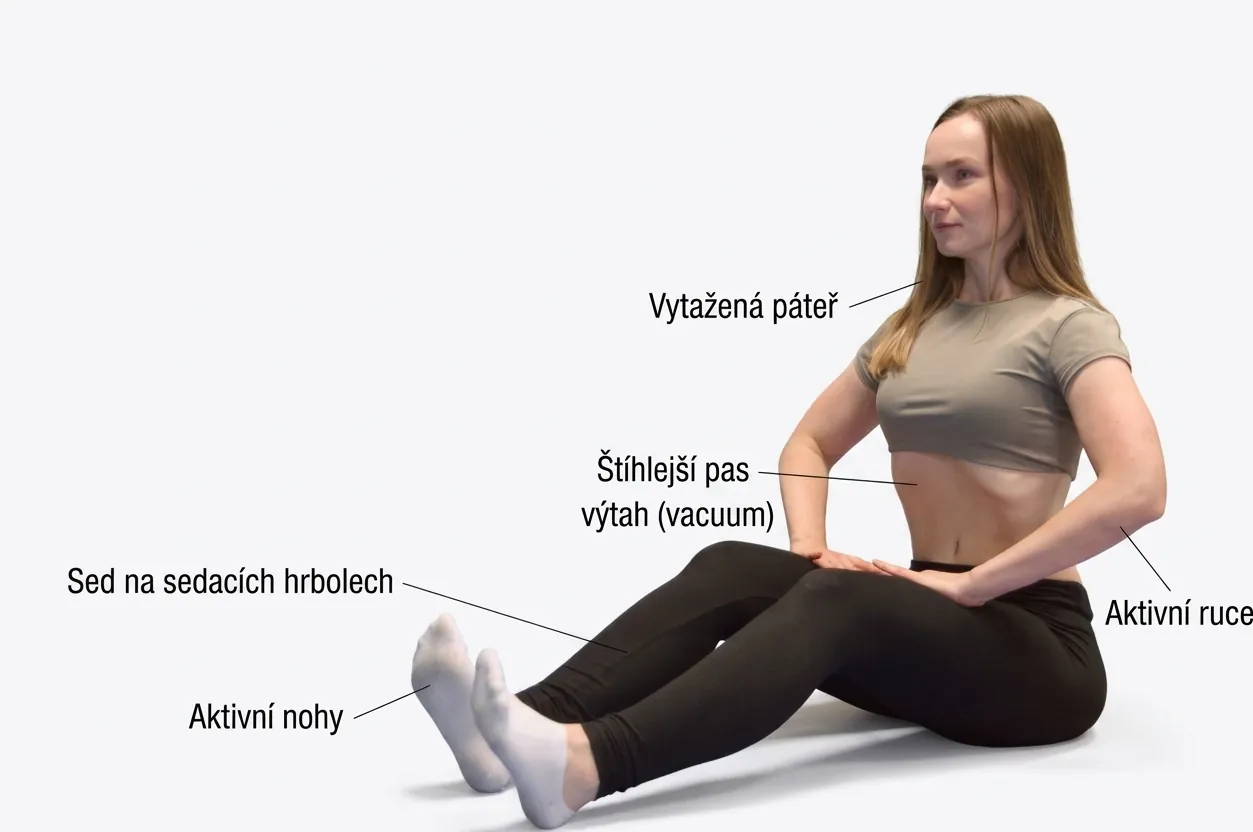
The BodyEase hypopressive method is an excellent tool for prevention and for restoring good posture and pelvic floor function. It works with the body in a neutral spine and pelvis and uses special breathing techniques. When the diaphragm relaxes and is followed by a breath pause, intra-abdominal pressure drops, which reflexively activates the whole deep stabilising system through the nervous system. The result is a gentle negative pressure that lightly lifts the pelvic organs (which you'll especially appreciate if they have dropped) and teaches the muscles to work automatically. A feeling of lightness often comes right after the exercise; more lasting changes appear after a few weeks of regular practice.
Professional care. If you're not sure what state your posture or pelvic floor is in, a consultation with a certified instructor of the method is always a good choice. They will help you uncover hidden chains of problems and set exercises tailored to your body. With problems such as urine leakage or a feeling of pressure in the vagina, also see a gynaecologist or physiotherapist.
Lucie Linková is a certified trainer and hypopressive-method instructor — not a doctor or physiotherapist. This article summarises her practice experience and published knowledge; it does not replace an examination or your doctor’s advice.
Movement and activity should bring us joy. When you combine sensible exercise with consideration for your own body, you'll gain strength and stability that lasts.
Choose the format that suits you: