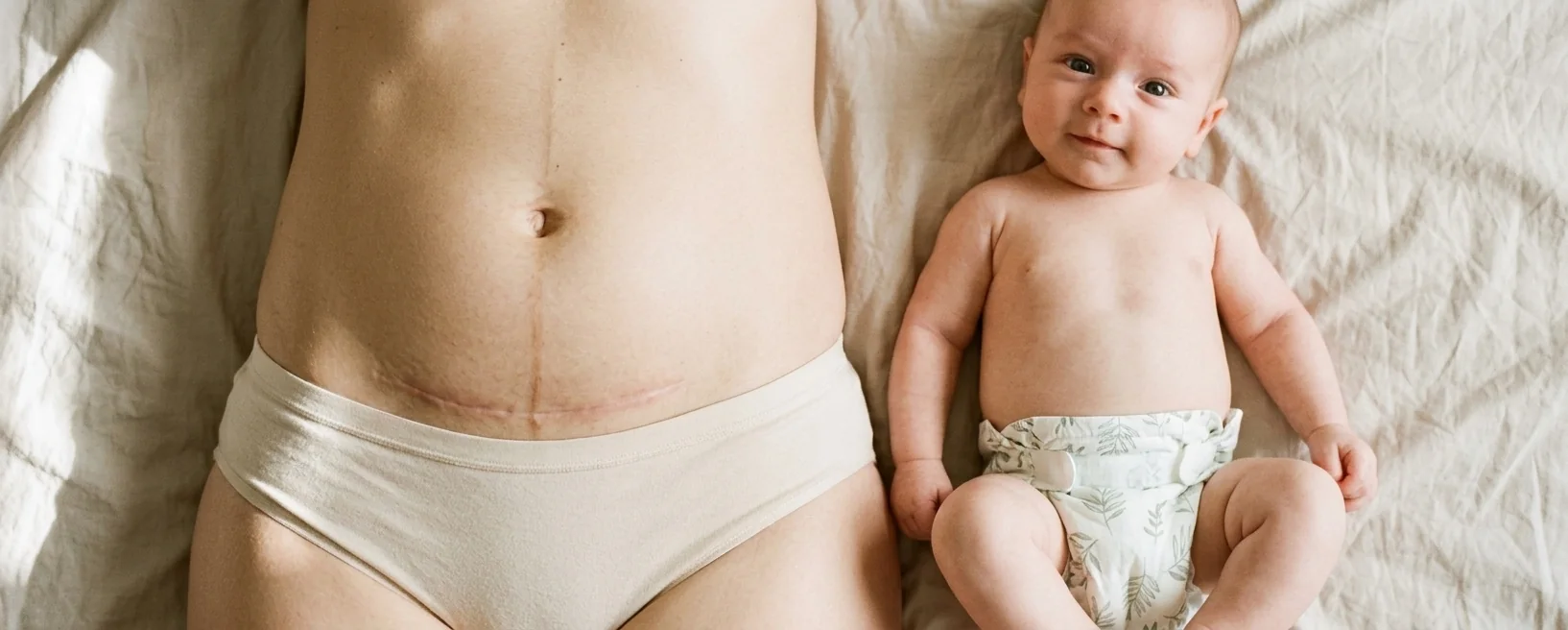
A caesarean is major surgery, and afterwards the body needs both time and kind care. Restoring the abdominal wall and the whole centre of the body does not begin with hard training but with understanding what happened inside. Let me walk you through how to give your core its strength, stability and good feeling back, step by step — without rushing.
Why your abdomen doesn’t work as it did before
During the operation several layers of tissue are cut through and nerve pathways are temporarily interrupted. The internal environment has to heal, which affects not only the muscles themselves but the body’s overall coordination. A separation of the rectus abdominis (diastasis) is common, as is the feeling that your belly “isn’t yours”.
What to keep in mind from the very beginning:
- Give yourself time. Fast results at the cost of overloading healing tissue are not worth it.
- The deep stabilising system comes first. The pelvic floor and the transverse abdominis work as a team.
- Breath is your best ally. It brings blood to the tissues, releases tension and activates muscles from the inside.
- Forget sit-ups and crunches. They create high internal pressure in the abdominal cavity and can set your recovery back.
First steps: how to start moving gently
In the early phase after surgery the point is to support microcirculation, proper healing and your sense of your own body.
- Gentle breathing practice. Notice how the chest and lower ribs widen naturally on the inhale, and how the centre of the body firms gently on the exhale.
- Gentle pelvic floor activation. On the exhale, lightly engage the pelvic floor as if drawing the tissues inward and upward.
- Daily walking. Short, regular walks get the circulation and the lymph moving.
- Mobilising the ribcage and spine. Soft shoulder circles, side stretches and releasing the ribcage all help the diaphragm work better.
- Everyday movement habits. Always get out of bed by rolling onto your side, and lift your baby with your legs, not your belly.
Giving the abdominal wall its firmness back
That “loose belly” feeling after birth is natural. To firm the abdominal wall you need to work with the deep layers, not only the surface muscles.
Diaphragmatic breathing, lying on your back. Bend your knees and place your feet on the floor. On the inhale, direct the air into the lower ribs. On the exhale, let the ribs drop and gently engage the lower abdomen.
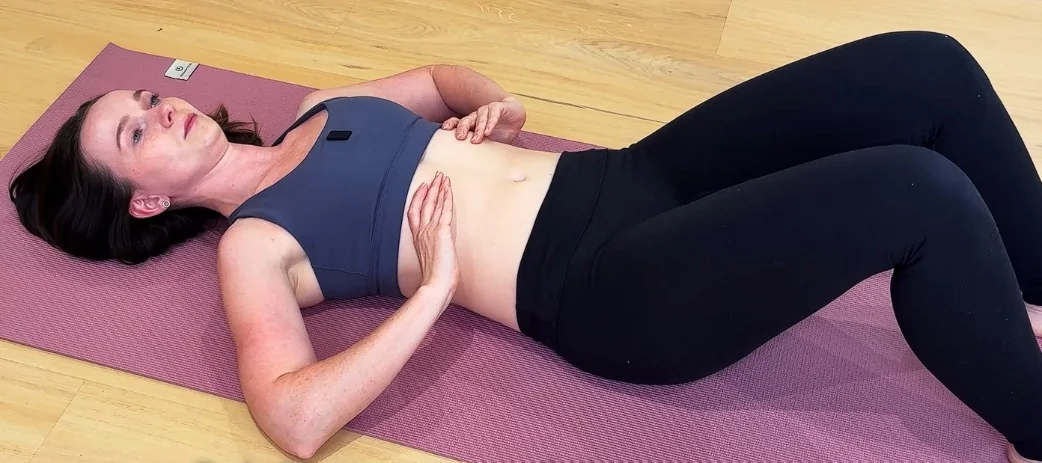
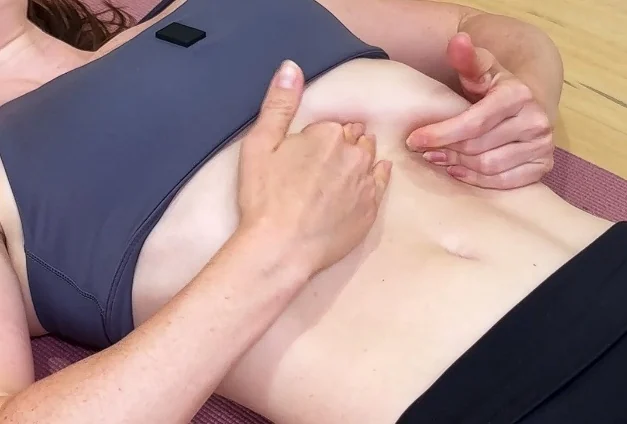
Releasing the diaphragm and the area under the ribs. Lying on your back, after an exhale, massage the area under the ribs gently with your fingertips to release tension.
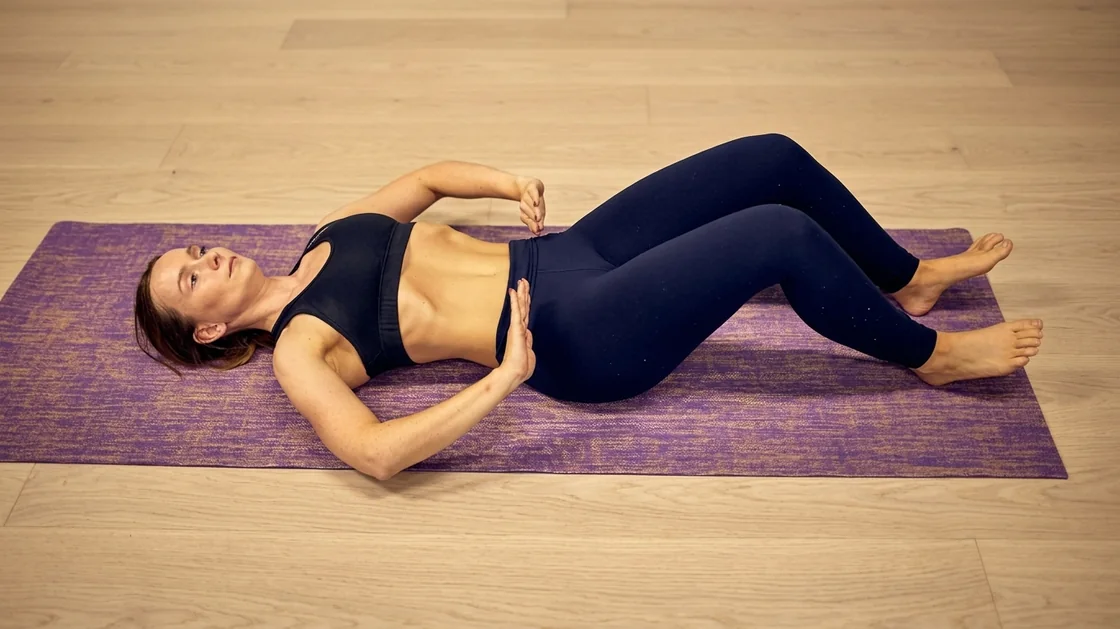
The bridge. Lying on your back with bent knees, lift the pelvis upward. This engages the glutes and hamstrings and stabilises the pelvis.
The central role of breath
A good breathing pattern is the foundation of the whole rehabilitation. It keeps internal pressure in the abdominal cavity stable and spares the scar, wakes the deep muscles naturally without clenching, and lowers stress so the body can recover.
Caring for the scar, and for recovery as a whole
Successful rehabilitation is not complete without caring for the scar itself. A scar should not adhere to the deeper layers of tissue — if it does, it can pull and cause pain well beyond the operated area.
- Scar care. Once the stitches have healed, use gentle massage (pressure work, moving the tissue layers against each other) to keep the scar elastic and freely mobile.
- Hydration and nutrition. Enough fluids and a balanced diet rich in protein and vitamins support tissue repair.
- Recovery and sleep. Even though sleep is scarce with a baby, rest whenever you can.
When the hypopressive method fits in
After a caesarean, the hypopressive method is one of the most interesting options available. Its main value is that it works with negative pressure in the abdominal cavity — so it can activate the pelvic floor and the deep abdominals without placing pressure on a healing scar or on the abdominal wall. In women after a caesarean it gently stimulates the pelvic organs, supports the healing of diastasis and the work of the pelvic floor, and helps restore awareness of a sensitive area.
When is it safe to begin? Usually from the 8th to 12th week after surgery, once the internal and external scar is firm enough, you can move on to the full version including the vacuum manoeuvre. Always have the specific timing confirmed by your doctor.
Lucie Linková is a certified trainer and hypopressive-method instructor — not a doctor or physiotherapist. This article summarises published research and practice experience; it does not replace an examination or your doctor’s advice.
Trust the process
Recovering after a caesarean takes time, persistence and kindness towards yourself. Don’t compare yourself with others — every body heals at its own pace.
If you are unsure whether you are doing the exercises correctly, or about the state of your scar and your diastasis, I recommend seeing a physiotherapist specialising in gynaecological physiotherapy.
Choose the format that suits you: