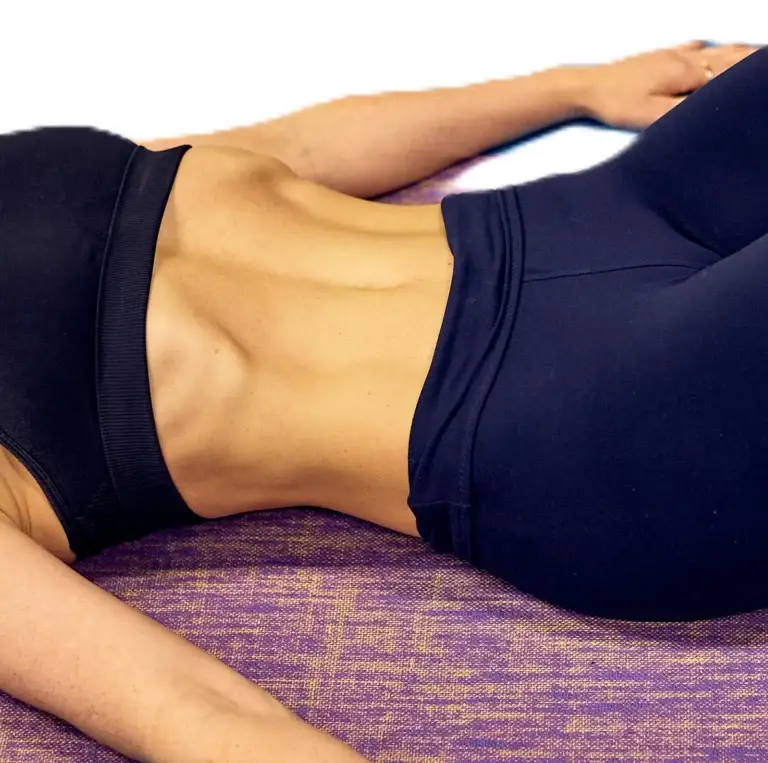
Most people think about the diaphragm only when they feel it — for instance during hiccups or a sudden movement. But the diaphragm is in fact one of the most important muscles in the body. And not just because we breathe thanks to it every second of our lives.
What is the diaphragm and how does it work
The diaphragm is a flat, dome-shaped muscle that separates the thoracic cavity from the abdominal cavity. On the inhale, the muscle fibres contract, the dome descends and creates a negative pressure that draws air into the lungs. On the exhale, the diaphragm returns to its resting position and the air is pushed out.
This simple mechanism repeats 15,000–25,000 times a day. And every movement of the diaphragm affects the structures around it — organs, the spine, blood vessels, nerves.
The diaphragm and spinal stabilisation
The diaphragm forms, together with the pelvic floor, transverse abdominal muscle and deep back muscles (multifidus), the deep stabilising system — the CORE. This system acts as a "pressure cylinder" that stabilises the spine with every movement.
If the diaphragm isn't functioning correctly — for example due to chronic tension or poor breathing habits — the entire CORE system is disrupted. The result can be back pain, pelvic instability or overloading of the surface muscles.
Effects on digestion and the organs
The diaphragm is in direct contact with the stomach, liver and oesophagus. With every breath it performs a gentle massage of these organs — stimulating peristalsis, supporting blood and lymph flow. A dysfunctional diaphragm stops performing this massage.
A chronically stiff diaphragm can contribute to:
- Gastro-oesophageal reflux (heartburn)
- Slowed peristalsis and constipation
- Bloating and functional digestive problems
- Restricted lymphatic drainage in the abdominal region
The diaphragm and the nervous system
The vagus nerve passes through the diaphragm — a key nerve of the parasympathetic nervous system that governs the body's "rest" mode. This is why slow, conscious breathing is such an effective tool for calming the nervous system.
A stiff diaphragm compresses and restricts this nerve pathway. The body then struggles to enter regeneration mode, sleep poorly, digest poorly — and is overall less resilient to stress.
How the hypopressive method works with the diaphragm
The hypopressive method includes specific techniques that consciously release the diaphragm and restore its natural mobility. Through guided exhalation, breath retention and postural alignment of the body, the following occur:
- Release of chronic tension in the diaphragm
- Restoration of the full range of breathing movement
- Improved coordination of the diaphragm with the pelvic floor
- Stimulation of the parasympathetic nervous system
When the diaphragm functions correctly, breathing improves, spinal stabilisation improves, digestion improves and stress management improves. All at once — because the body is one interconnected system.
Want to work consciously with your diaphragm and improve the function of your whole body?
Sign up for a course →